
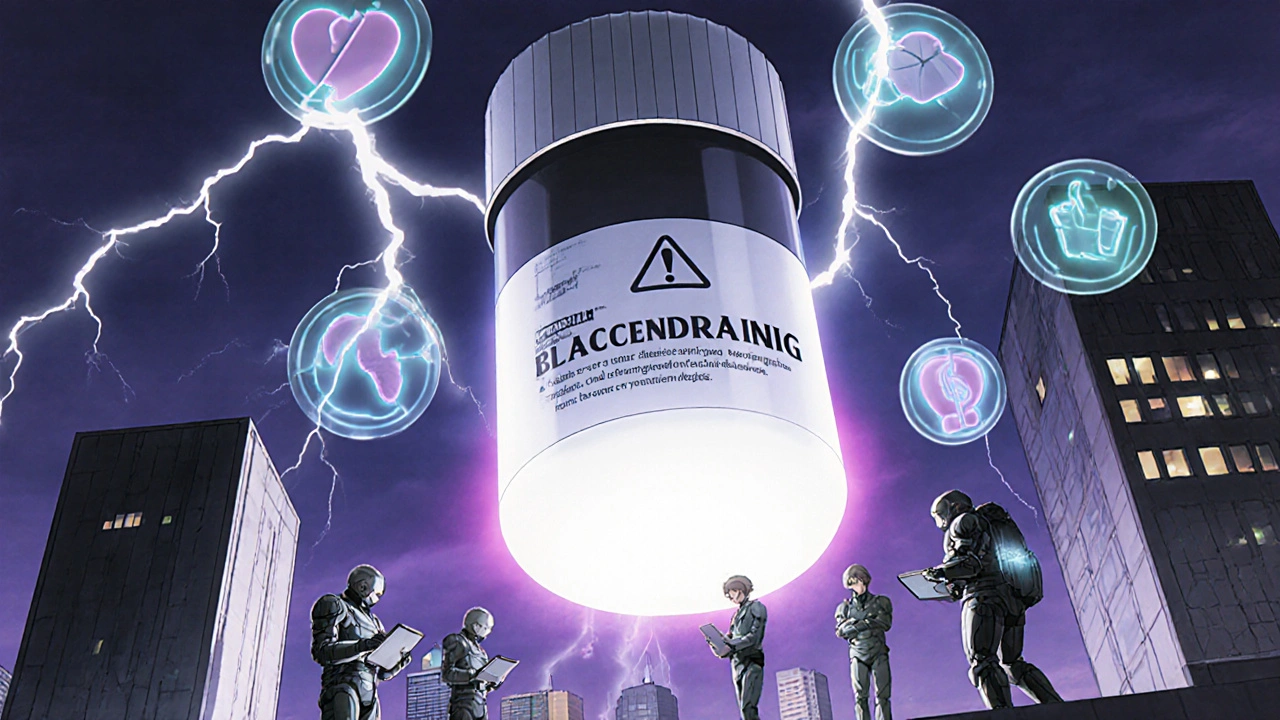
When a drug comes with a boxed warning, the strongest safety alert the U.S. Food and Drug Administration can issue. Also known as a black box warning, it’s printed in a bold, bordered box on the drug’s label to grab your attention—because something here could kill you. This isn’t a gentle reminder. It’s a red flag for serious, sometimes fatal, side effects that have been proven in real patients—not just lab tests.
These warnings aren’t random. They show up when a drug has caused death, life-threatening reactions, or permanent disability in enough people to demand action. Think of it like a seatbelt sign in a car: it doesn’t mean the car is unsafe, but ignoring it could cost you everything. Drugs like clozapine for schizophrenia, valproate for seizures, or fluoroquinolone antibiotics carry these warnings because they can cause liver failure, birth defects, or tendon rupture. You won’t see these warnings on aspirin or vitamin C. They’re reserved for powerful medicines with real, documented dangers.
The FDA, the U.S. agency responsible for approving and monitoring drugs doesn’t slap these on lightly. They’re added after post-market reports, clinical studies, or tragic outcomes. And while the adverse drug reactions, harmful side effects caused by medications listed in these warnings are rare, they’re serious enough that doctors must screen you before prescribing. For example, if you’re being considered for a drug with a boxed warning for suicidal thoughts, your doctor will check your mental health history. If it’s for liver damage, they’ll run blood tests first. This isn’t bureaucracy—it’s protection.
Reading the medication guide, a handout the FDA requires for high-risk drugs that comes with your prescription isn’t optional. It’s your lifeline. These guides break down exactly what to watch for: unusual bruising, sudden mood changes, chest pain, or unexplained fatigue. They tell you when to call your doctor and when to go to the ER. And if you’re taking more than one drug, the risk multiplies. Many boxed warnings mention interactions—like how combining certain antibiotics with statins can cause muscle breakdown. That’s why knowing your full list of meds matters.
What you’ll find in the posts below are real stories and facts about drugs carrying these warnings—how they work, who’s at risk, and how people avoid disaster. From codeine overdoses in genetic outliers to steroid-induced psychosis and antibiotic-linked blood disorders, these aren’t hypotheticals. They’re documented cases. You’ll learn how to spot the early signs, how to talk to your pharmacist, and when to push back if something feels off. This isn’t about scaring you. It’s about giving you the power to ask the right questions before the next prescription is filled.
Posted By Kieran Beauchamp On 28 Nov 2025 Comments (11)
Boxed warnings are the FDA's strongest safety alerts for prescription drugs. Learn how these labels change over time, why updates matter, and what patients and providers need to know about tracking life-threatening risks.
READ MORE