
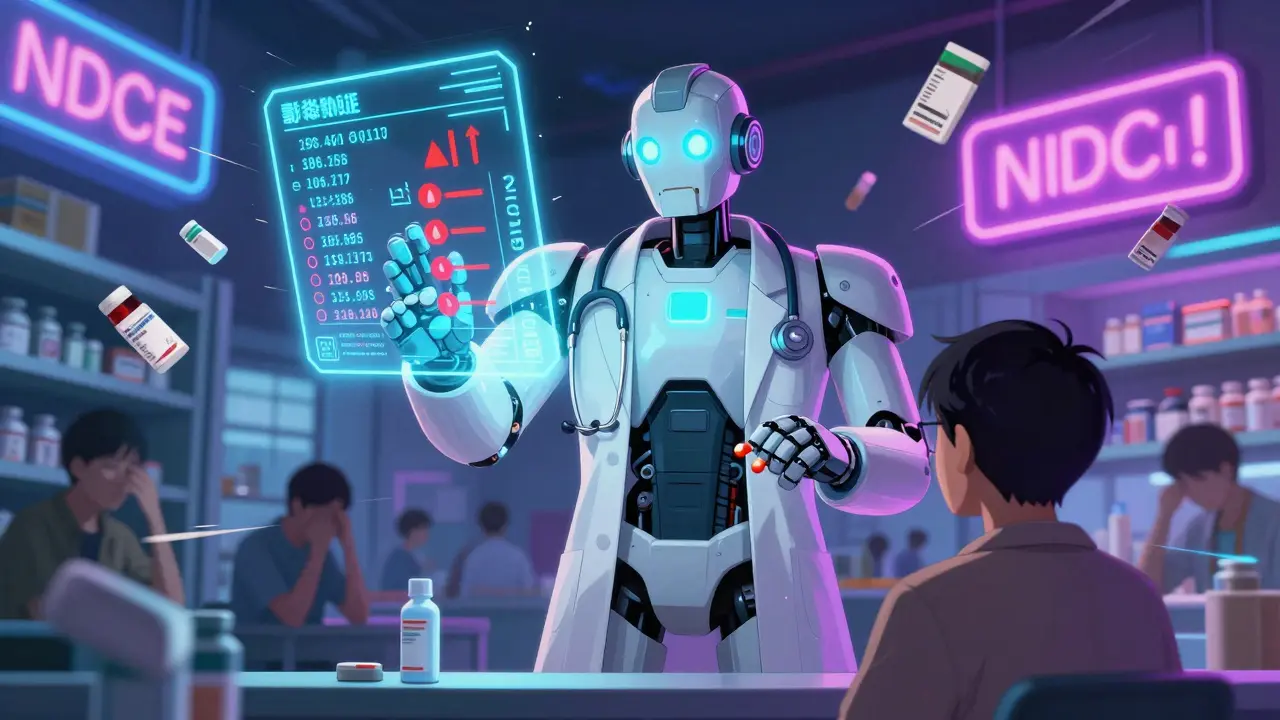
Every day, pharmacists hand out millions of generic drugs. They’re cheaper, widely available, and approved by the FDA. But what happens when a generic drug doesn’t work the same way as the brand-name version? When a patient suddenly feels dizzy, has seizures, or their blood pressure spikes after switching pills? That’s when the pharmacist’s responsibility kicks in - not just to dispense, but to report.
Why Pharmacists Are on the Front Line
Pharmacists are the last healthcare professional a patient sees before taking a medication. They see the patient’s reaction. They notice if a pill that used to work suddenly doesn’t. They hear complaints: “This new generic makes me sick,” or “I can’t sleep since I switched.” These aren’t just anecdotes. They’re signals - and the FDA needs them.The FDA doesn’t require pharmacists to report adverse events. But it strongly encourages it. And for good reason. Between 2015 and 2022, reports of generic drug problems jumped 131%. Yet pharmacists, who dispense 75% of all prescriptions in the U.S. - and 90% of generics - only made up 2.3% of those reports. That’s a massive gap.
Why? Because pharmacists aren’t trained to be detectives. They’re busy. They’re juggling refill requests, insurance issues, and counseling patients. But when a patient reports a sudden change after a generic switch, that’s not just a complaint - it’s a potential safety signal.
What Counts as a Problem?
Not every side effect is reportable. The FDA defines serious adverse events as those that are:- Life-threatening
- Lead to hospitalization
- Cause permanent disability
- Result in congenital anomalies
- Require medical intervention to prevent lasting harm
But there’s another category that’s unique to generics: therapeutic inequivalence. That’s when a generic drug meets all the FDA’s lab tests for bioequivalence - but in real life, patients don’t respond the same way. A patient on a generic seizure medication might start having breakthrough seizures. Someone on a generic blood thinner might develop clots. A patient on a generic antidepressant might suddenly feel worse.
The FDA explicitly lists therapeutic inequivalence as reportable. And pharmacists are often the first to notice it - because they see the same problem across multiple patients. A 2023 study in JAMA Internal Medicine found that 63% of potential safety signals for generic drugs were first spotted by pharmacists who noticed patterns: “Three patients on this generic had the same reaction.” That’s not coincidence. That’s data.
The Reporting System: MedWatch
The FDA’s MedWatch program is the official channel for reporting drug problems. Pharmacists use Form 3500 - the same form doctors and nurses use. But here’s what makes it tricky:- You need an identifiable patient (age, gender, initials are fine)
- You need the exact drug - including the National Drug Code (NDC)
- You need the manufacturer name and lot number
- You need details: What happened? When? Did it improve after stopping the drug?
“Patient had an injury” won’t cut it. The FDA rejects vague reports. You have to be specific: “72-year-old male, switched from brand-name levothyroxine to generic on 10/15/2025. TSH rose from 3.2 to 12.1 in 3 weeks. Symptoms: fatigue, weight gain, cold intolerance. Returned to brand, TSH normalized in 4 weeks.” That’s the kind of report that triggers an FDA investigation.
Since 2023, the MedWatch online portal has a dedicated “generic drug concern” category. You can now flag whether the issue is related to therapeutic inequivalence, manufacturing quality, or labeling. That’s a big improvement - but most pharmacists still don’t know it’s there.
The Legal Gray Area
Here’s the ugly truth: generic drug manufacturers can’t change their labels. Because of the 2011 Supreme Court case PLIVA v. Mensing, they’re legally blocked from updating warnings - even if they know their drug is causing problems. Only the brand-name manufacturer can change the label. But the brand manufacturer doesn’t make the generic. So if a patient has a bad reaction to a generic, the brand company often gets the report - and may not even know it’s about a generic version.This creates a reporting black hole. A pharmacist sees a problem with a generic made by Company A. But the label says “Brand X.” The patient’s chart says “generic.” The pharmacy system doesn’t track which manufacturer’s generic was dispensed. So the report goes to Brand X - and gets lost in the noise.
That’s why pharmacists must document everything. Not just what drug was dispensed, but who made it. Lot number. Date. If you don’t record it, no one else will.
Why Reporting Is So Hard - And What’s Holding Pharmacists Back
A 2023 survey of 1,247 community pharmacists found the top barriers to reporting:- 68.4% said they didn’t have time
- 52.1% weren’t sure if the event met reporting criteria
- 41.7% couldn’t tell if it was the brand or generic causing the issue
And here’s the kicker: 89.2% of pharmacists agree they have a professional responsibility to report. But only 43.6% actually do it regularly. That’s not laziness. It’s systemic failure.
Pharmacy schools don’t train students on MedWatch. Most pharmacies don’t have a system to track generic substitutions. No one checks if you filed a report. There’s no incentive. No penalty. Just silence.
But in California, Illinois, Massachusetts, and New York, state pharmacy boards require mandatory reporting of serious adverse events. If you work in one of those states, you’re legally obligated. In the other 46? It’s still a professional duty - even if it’s not enforced.

What You Can Do - Right Now
You don’t need to be a safety expert. You don’t need to be a researcher. You just need to act when you see something off.Here’s your simple checklist:
- Notice a change? Patient reports new side effects after switching to a generic? Write it down.
- Check the details. What’s the generic manufacturer? What’s the lot number? Did you switch brands recently?
- Document it. Add it to the patient’s record: “Patient reported nausea after switching to Teva levothyroxine. TSH increased from 3.0 to 9.2. Returned to brand, symptoms resolved.”
- Report it. Go to the FDA MedWatch portal. Use the “generic drug concern” category. Pick “therapeutic inequivalence.” Fill in the NDC, lot number, and clinical details. Submit.
- Follow up. If multiple patients report the same issue, contact your state board of pharmacy. Push for change.
You don’t need to wait for a crisis. One report might not change anything. But 10 reports? 50? That’s how the FDA finds patterns. That’s how they pull a drug off the market. That’s how they fix a problem before more people get hurt.
The Bigger Picture
Generic drugs save the U.S. healthcare system over $300 billion a year. That’s huge. But safety can’t be an afterthought. The FDA’s Office of Generic Drugs has a Therapeutic Equivalence Working Group - created specifically to review pharmacist reports. In 2022, they reviewed 147 generic products based on pharmacist input. Twelve of those led to direct warnings to doctors and patients.That’s real impact. And it only happens because someone - likely a pharmacist - took the time to report.
Pharmacists are the eyes and ears of the drug safety system. No one else sees what you see. No one else knows what you know. If you don’t report, who will?
Do pharmacists have to report generic drug problems by law?
No, federal law does not require pharmacists to report adverse events or generic drug problems. However, the FDA strongly encourages reporting through MedWatch, and some states - including California, Illinois, Massachusetts, and New York - have made reporting mandatory for serious adverse events. Even where it’s not legally required, professional organizations like ASHP and APhA consider it a core ethical responsibility.
What’s therapeutic inequivalence?
Therapeutic inequivalence happens when a generic drug meets FDA bioequivalence standards in lab tests but doesn’t work the same way in real patients. For example, a patient might have a seizure after switching to a generic antiepileptic drug, even though blood levels appear normal. This suggests the generic may have different absorption, stability, or inactive ingredients that affect clinical outcomes. The FDA treats this as a serious safety concern and encourages pharmacists to report it.
How do I know if a problem is from the generic or the patient?
Look for patterns. If one patient has a reaction, it could be coincidence. If three or more patients on the same generic from the same manufacturer report the same issue - especially after switching from a brand or another generic - that’s a red flag. Document everything: timing of the switch, symptoms, lab results, and what happened when they went back to the original drug. That’s how you separate patient-specific issues from product-specific problems.
Can I report a problem if I’m not sure the drug caused it?
Yes. The FDA’s 2023 guidance clearly states: report even if you’re not certain the drug caused the event. The goal is to collect all possible signals so the FDA can analyze trends. You’re not making a diagnosis - you’re providing a data point. If multiple reports point to the same drug, the FDA investigates further. Your uncertainty doesn’t invalidate your report - it makes it more valuable.
How long do I have to report a serious adverse event?
For serious adverse events - those that are life-threatening, require hospitalization, or cause permanent disability - the FDA recommends reporting within 15 calendar days of first receiving the information. There’s no legal penalty for delays, but the sooner you report, the faster the FDA can act. For non-serious but unexpected events, report as soon as practical.
Where do I find the FDA MedWatch form?
Go to the FDA’s MedWatch website: www.fda.gov/medwatch. You can file online using Form 3500, or download a PDF to mail or fax. The online form now includes a specific option to mark reports as “generic drug concern,” with subcategories for therapeutic inequivalence, manufacturing issues, or labeling errors.
What if I report and nothing happens?
That’s normal. Most reports don’t lead to immediate action. But the FDA doesn’t act on single reports - it looks for patterns. One report might be ignored. Ten reports from different pharmacies on the same generic? That triggers a review. Your report adds to a database of over 25 million entries. You’re helping build the evidence. Even if you don’t see results, you’re part of the safety net.
Do I need to get patient consent to report?
No. Under FDA rules, healthcare professionals can report adverse events without patient consent. Patient identifiers (like name or full address) are not required. You can use initials, age, and gender. The system is designed to protect privacy while collecting critical safety data. You’re not sharing medical records - you’re submitting a safety observation.
Jackie Be
December 21, 2025 AT 21:10Also why does the label say 'Brand X' when it's clearly made by some factory in India? The system is broken.
Jon Paramore
December 22, 2025 AT 02:50Cara C
December 23, 2025 AT 15:50John Hay
December 24, 2025 AT 16:23Dan Adkins
December 25, 2025 AT 16:51Stacey Smith
December 26, 2025 AT 16:47Grace Rehman
December 28, 2025 AT 10:55Maybe we should just stop pretending generics are safe. Maybe we should just call them 'budget drugs' and let patients decide if they want to gamble with their health.
Orlando Marquez Jr
December 30, 2025 AT 08:22Hannah Taylor
January 1, 2026 AT 01:24Teya Derksen Friesen
January 1, 2026 AT 04:16Swapneel Mehta
January 1, 2026 AT 06:24Jay lawch
January 1, 2026 AT 14:34Ben Warren
January 2, 2026 AT 16:22