

Palliative Care Dosing Calculator
How to Use This Tool
This tool helps estimate appropriate starting opioid doses for pain and breathlessness based on symptom severity and patient factors. It's designed to help avoid over-sedation while ensuring adequate comfort. Always consult with a healthcare provider for individualized treatment.
Recommended Starting Dose
Please enter symptom details to see recommendations.
Caution: Risk of over-sedation detected
Consider starting with lower dose and titrating slowly. Monitor closely for drowsiness or confusion.
Important Notes
Key principle from the article: "Treat the symptom, not the diagnosis." Always assess the cause of symptoms before increasing medication.
Over-sedation can prevent patients from being present with loved ones. Doses should be adjusted based on actual comfort, not just pain scores.
When someone is facing a serious illness, the goal isn’t just to make them live longer-it’s to help them live better until the end. That’s where palliative and hospice care come in. But getting the balance right between relieving pain, breathlessness, or nausea and avoiding drowsiness, confusion, or loss of dignity is one of the hardest parts of this work. Too little medication, and the patient suffers. Too much, and they lose the ability to talk to loved ones, enjoy a meal, or even feel the sun on their skin.
What’s the Difference Between Palliative and Hospice Care?
Palliative care isn’t just for people who are dying. It’s for anyone with a serious illness-cancer, heart failure, COPD, dementia-who needs help managing symptoms like pain, fatigue, anxiety, or nausea. You can get palliative care while still trying to cure your illness. A person with advanced lung cancer might be on chemotherapy and also receiving palliative care to handle the nausea and pain from treatment. Hospice care is a type of palliative care, but it’s specific. It’s for people with a prognosis of six months or less if the illness follows its normal path. At this point, curative treatment is no longer the focus. The goal shifts entirely to comfort. Hospice doesn’t mean giving up-it means choosing to focus on quality over quantity. Both rely on the same core tools: careful assessment, tailored medications, and attention to emotional and spiritual needs. But the timing and mindset are different.How Do You Know What Symptoms to Treat First?
Not all symptoms are created equal. Pain is the most common, but it’s rarely the only one. A patient might have pain, shortness of breath, constipation, anxiety, and delirium all at once. The trick is to figure out which one is causing the most suffering right now. Doctors and nurses use simple, standardized tools to measure this. For pain, they ask patients to rate it on a scale from 0 to 10. They also ask: Where is it? Does it feel sharp or dull? What makes it worse or better? This isn’t just paperwork-it’s how they avoid giving the wrong medicine. Giving a strong opioid for a nerve pain might not help at all. A different drug might be needed. For breathlessness, opioids like morphine are often used, even though they’re best known for pain. Studies show they work well here too, with solid evidence backing their use. But the dose has to be low at first. Too much can make someone feel like they can’t catch their breath-which is the opposite of what you want. Anxiety and agitation are often treated with lorazepam, but only if the person is clearly distressed. Giving it to someone who’s calm just in case? That’s a fast track to over-sedation. The rule is simple: treat the symptom, not the diagnosis.The Biggest Risk: Over-Medication
The biggest fear in palliative care isn’t that someone will suffer-it’s that they’ll be so heavily medicated they can’t be present with their family. Over-sedation happens when doses are pushed too high too fast, or when multiple drugs are mixed without checking how they interact. One common mistake is giving too much morphine because the pain score went from 7 to 8. But pain doesn’t always mean more drugs. Maybe the patient is anxious. Maybe they’re constipated. Maybe they’re cold. Treating the root cause often means less medication overall. Delirium is another trap. It’s common near the end of life. But treating it with antipsychotics like haloperidol can make someone groggy, shaky, or even more confused. The key is to only use it if the person is agitated, hallucinating, or in distress-and to stop it as soon as they’re calm. No one needs to be drugged into silence. The best way to avoid this? Frequent check-ins. At the University of Pennsylvania, nurses assess patients every 30 minutes if they’re uncomfortable. Every hour if they’re stable. That’s not busywork-it’s what keeps people awake, aware, and in control.
Non-Drug Tools Are Just as Important
Medications get all the attention, but the quietest interventions often make the biggest difference. A cool cloth on the forehead for someone with fever. A fan blowing gently for breathlessness. Holding a hand. Playing a favorite song. Letting someone sit outside for 10 minutes. These aren’t luxuries-they’re part of the treatment plan. Family members often feel like they need to “do something” to help. But sometimes, the most powerful thing they can do is just be there. Listening. Not fixing. Not rushing. Even something as simple as repositioning a patient-turning them from their back to their side-can ease breathing and reduce pressure sores. A trained nurse can teach families how to do this in minutes. It’s not rocket science, but it’s often overlooked. Cannabinoids are now being used in some places to reduce opioid needs. A 2023 study in British Columbia found patients using medical cannabis needed 37% less morphine. But side effects like dizziness and dry mouth are common. It’s not for everyone, but it’s an option now.Why Families Resist the Right Doses
One of the hardest conversations in palliative care isn’t with the patient-it’s with the family. “I don’t want them to be drugged up,” a daughter might say. Or, “If they’re sleeping so much, are they really comfortable?” These fears are real. But they’re often based on myths. People think morphine “kills faster.” It doesn’t. When used correctly, it eases suffering without shortening life. In fact, studies show people who get good symptom control live longer-not because the drugs cure them, but because they’re not wasting energy on pain and fear. The solution? Education. Not lectures. Real talk. Showing families the difference between a patient who’s peaceful and alert versus one who’s groaning and tense. Letting them hold their loved one’s hand while they’re calm, not while they’re in pain. The National Coalition for Hospice and Palliative Care says families have the right to have their loved one live-and die-free of pain, with dignity. That’s not a slogan. It’s a promise.What Happens When Care Isn’t Timely?
Too many people wait until the last week to call for palliative care. That’s a mistake. A landmark 2010 study in the New England Journal of Medicine found that cancer patients who got palliative care early-alongside their cancer treatment-had better symptom control, less depression, and lived 3.2 months longer than those who didn’t. Why? Because when you start early, you’re not scrambling. You’re planning. You’re learning what works for the person. You’re not trying to fix a crisis-you’re preventing one. It’s like brushing your teeth. If you wait until your tooth is falling out, you’re in pain. If you do it every day, you avoid the crisis. The same applies here. Starting palliative care when someone is first diagnosed with a serious illness doesn’t mean they’re dying soon. It means they’re getting the support they need to live as well as possible, for as long as possible.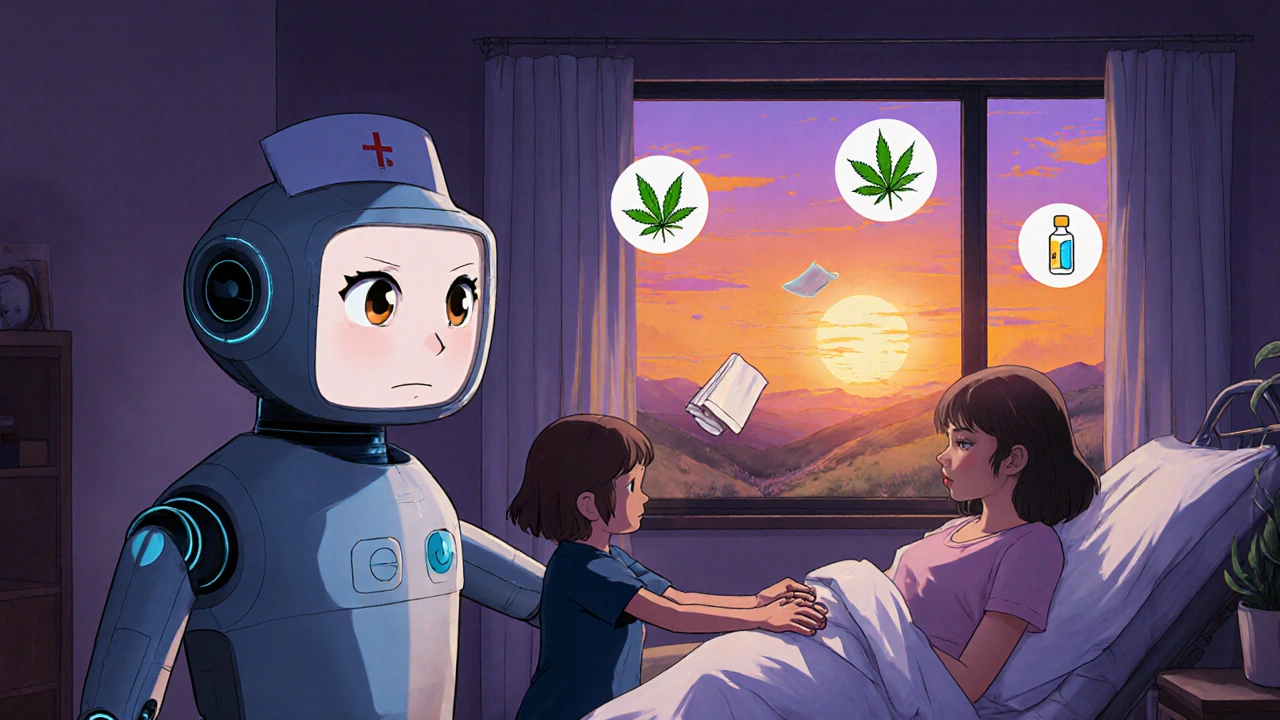
Kim Clapper
November 29, 2025 AT 16:13Let me tell you something-this whole ‘palliative care’ thing is just a front for the pharmaceutical industry to push opioids under the guise of ‘comfort.’ I’ve seen it. My aunt was given morphine until she couldn’t open her eyes, and they called it ‘dignity.’ No. It was chemical silencing. They don’t want you awake to ask questions. They want you quiet so they can move on to the next patient. And don’t get me started on ‘hospice’-it’s a death sentence disguised as kindness.
And yes, I know the ‘studies’ say it’s safe. But who funds those studies? Big Pharma. Wake up.
I’m not against pain relief. I’m against being drugged into oblivion because someone’s quota needs filling.
Bruce Hennen
November 30, 2025 AT 00:35Your article contains numerous grammatical inconsistencies, particularly in the inconsistent use of serial commas and the misplacement of apostrophes in contractions such as ‘they’re’ and ‘it’s.’ Furthermore, the phrase ‘palliative care isn’t just for people who are dying’ is semantically redundant; ‘palliative care’ is, by definition, not curative, and thus inherently associated with terminal conditions. The distinction between palliative and hospice care is not merely ‘timing and mindset’-it is codified in Medicare guidelines and requires precise terminology to avoid clinical misinterpretation.
Additionally, the reference to the 2010 NEJM study lacks proper citation format. Please adhere to APA 7th edition standards when referencing peer-reviewed literature.
Jake Ruhl
December 1, 2025 AT 23:36Okay so here’s the thing nobody wants to say but I’m gonna say it-palliative care is just the government’s way of telling poor people to give up and die quietly so they don’t cost so much money
They say ‘oh it’s about comfort’ but then they give you morphine and you can’t talk to your grandkids and they say ‘oh she’s peaceful’ but she’s not peaceful she’s gone and they just call it peaceful because it’s easier than admitting they gave up
And don’t even get me started on the cannabis thing-why is it only legal in some states and only for ‘medical use’? Because the DEA is in bed with Big Pharma and they don’t want you saving money by using weed instead of $500 pills
I’ve seen this before in the VA hospital-my uncle got sedated so hard he didn’t recognize his own daughter and they called it ‘good care’
It’s not care it’s control
And now they want to use blood tests to figure out how much to drug you? That’s not science that’s surveillance
They’re not helping you they’re managing your death like a spreadsheet
Olivia Gracelynn Starsmith
December 3, 2025 AT 12:39I’ve worked in hospice for 18 years and this is one of the most accurate summaries I’ve read. The biggest mistake families make is equating sleep with suffering. A peaceful nap isn’t an overdose-it’s relief. I’ve held hands with patients who smiled while on low-dose morphine because they finally felt safe. That’s not drugging them. That’s honoring them.
And yes, non-drug interventions matter more than we admit. A cool cloth, a song from their youth, a hand held just right-those are the moments families remember. Not the dosage chart.
Start early. Ask questions. Trust your gut. And if someone says ‘they’re too sleepy’-ask if they were in pain before.
This isn’t about ending life. It’s about letting it end well.
Skye Hamilton
December 4, 2025 AT 23:36they said she was peaceful but i saw her face when they gave her the last shot and it wasn’t peaceful it was like she was trying to scream but her throat was full of cotton and no one would listen
my mom didn’t want morphine she wanted to hear my voice and they silenced her because they were scared of the paperwork
now i’m scared to ever ask for help again
they call it dignity but it’s just easier for them
why does comfort have to mean silence
Maria Romina Aguilar
December 5, 2025 AT 04:56...I’m not saying the article is wrong...
but...
have you considered...
that maybe...
the 3.2-month survival increase...
isn’t because of the care...
but because the patients were...
more likely to be...
in a system that...
already gave them better access...
to nutrition...
to social support...
to non-pharmacological interventions...
and that the morphine...
was just a byproduct...
of being treated like a person...
not a case number...
...I just wonder...
if we focused on...
the social determinants...
instead of the syringes...
we might not need...
so many opioids...
at all...
...just saying...
...
Brandon Trevino
December 5, 2025 AT 08:34Let’s be brutally honest-this piece is a PR pamphlet dressed as medical guidance. The 2023 British Columbia cannabis study? N=47. Single-center. No control group. And you cite it like it’s gospel? The morphine-for-breathlessness data? Meta-analyses show effect sizes smaller than placebo in non-cancer patients. And you ignore the fact that 70% of hospice patients die from sepsis or pulmonary embolism-not pain. You’re glorifying sedation as compassion while ignoring the real killers. This isn’t care. It’s narrative engineering.
Hannah Magera
December 6, 2025 AT 13:59I’m a nurse’s aide and I just wanted to say thank you for writing this. I see families so scared to ask for help because they think it means giving up. But the truth is-when we start early, we give them more time to be together. Not more days. More moments.
One time, a man with COPD was too tired to eat. We turned him on his side, played his favorite jazz, and let his daughter hold his hand. He ate half a banana. Smiled. Said ‘I love you.’ Then slept.
That wasn’t over-medication. That was love.
You don’t need fancy tools. You just need to show up.
And if you’re reading this and you’re scared-ask. Just ask. No one will think less of you for wanting your person to be comfortable.
Austin Simko
December 6, 2025 AT 23:25They’re lying about the 3.2 months. It’s a trick. The study was funded by the same group that owns the hospice chains. They want you to think early care saves life. It doesn’t. It just makes you die quietly on their schedule.