

Medication Impairment Calculator
How Medications Affect Your Driving
Most people underestimate how medications impair driving. Even common drugs like antihistamines can cause impairment equivalent to a 0.10% BAC. This tool helps you calculate safe waiting times based on medication type and dose.
Results
Select medication and time to see results
Important: This tool provides general guidance. Individual responses vary. Always prioritize safety and follow your doctor's advice.
Legal Note: In 28 states, specific blood concentration thresholds exist for certain drugs. In all 50 states, any detectable impairment can lead to DUI charges.
Every year, thousands of people get behind the wheel after taking a pill they think is harmless. Maybe it’s a sleep aid, a painkiller, or an allergy medicine. They feel fine. They’ve taken it before. But what they don’t realize is that their reaction time is slower, their focus is blurred, and their body isn’t responding the way it should. And if they get pulled over-or worse, cause a crash-they could face serious legal consequences, even if they didn’t drink alcohol.
What Medications Actually Do to Your Driving Skills
Many people assume that only alcohol or illegal drugs can mess with driving. That’s not true. Prescription and over-the-counter meds can do the same thing-sometimes worse. The brain needs to process information fast when you’re driving: spotting a brake light, judging distance, correcting a swerve. Certain medications slow that process down. Benzodiazepines like Xanax or Valium reduce brain activity by 25-40%, according to Canadian research. That means you’re not just drowsy-you’re mentally foggy. Opioids like oxycodone or fentanyl cause droopy eyelids, narrow pupils, and delay reactions by up to 300 milliseconds. That’s longer than the blink of an eye. And it’s enough to miss a stop sign. Even common pain relievers like ibuprofen or naproxen carry risks. Studies show users have a 58% higher chance of crashing. Why? They can cause dizziness, blurred vision, or sudden fatigue. And then there’s the stuff you pick up without a prescription: Benadryl, Tylenol PM, NyQuil. These all contain diphenhydramine, an antihistamine that impairs driving as much as a 0.10% blood alcohol level-above the legal limit in every U.S. state. Antidepressants, especially older ones like amitriptyline, also increase crash risk. A 2014 review found drivers on these meds had a 40% higher chance of being in an accident. Even if you feel “normal,” your brain isn’t operating at full capacity.It’s Not Just One Drug-It’s the Mix
The biggest danger isn’t usually one medication. It’s the combo. Take someone on an opioid for back pain, a benzodiazepine for anxiety, and a sleep aid with diphenhydramine. Each one by itself might be risky. Together? They multiply the effect. Dr. Robert Voas’s research found that 22% of drivers in trauma centers had multiple drugs in their system. The impairment wasn’t just additive-it was exponential. And alcohol? Even one drink with these meds can turn a mild side effect into a life-threatening one. The FDA and NHTSA both warn that mixing alcohol with CNS depressants can lead to sudden loss of control, blackouts, or death behind the wheel. Many people don’t realize this. A 2021 AAA survey showed that 70% of drivers who took three or more potentially impairing medications still drove within two hours of taking them. They thought, “I took it last night-I’m fine now.” But drugs like zolpidem (Ambien) can linger in your system for up to 11 hours. That’s why someone might wake up at 7 a.m., take a Tylenol PM the night before, drive at 9 a.m., and still fail a field sobriety test.Legal Consequences Are Real-And Getting Tougher
You can be charged with DUI for prescription drugs-even if you have a valid prescription. All 50 states now include prescription medications in their DUI laws. Unlike alcohol, though, there’s no universal legal limit. In 28 states, there are specific blood concentration thresholds for certain drugs. In the other 22, any detectable amount can be enough for a charge if impairment is proven. Police use Drug Recognition Experts (DREs)-officers trained to spot signs like pupil size, balance, and reaction time-to determine impairment. They don’t need a breathalyzer. They just need to see you fail a field test and confirm the presence of drugs in your system. Penalties vary by state, but they can include license suspension, mandatory drug education, fines, community service, and even jail time. A DUI conviction stays on your record for years. It can affect your job, your insurance rates, and your ability to rent a car or travel abroad. And here’s the twist: you can be held liable in civil court too. If you cause a crash while impaired by medication, your insurance might not cover damages. Victims can sue you for medical bills, lost wages, and pain and suffering-even if you didn’t know the drug would affect you.
Why Warning Labels Don’t Help
You’ve seen the small print: “May cause drowsiness.” That’s it. No timing. No guidance. No warning about how long the effect lasts. A 2021 FDA review found that only 32% of medication package inserts gave specific timeframes for driving restrictions. Most just say “avoid operating machinery.” But driving a car? That’s machinery too. Yet 68% of patients said their doctor never mentioned driving risks when prescribing these meds. Pharmacists are better at it now. Since 2022, the American Pharmacists Association recommends 12 key counseling points for patients on impairing drugs. But not all pharmacies do it consistently. And if you’re picking up a refill without talking to anyone, you’re flying blind. The FDA started requiring “Driving Risk Scores” on labels in May 2023-rating drugs from 1 (minimal risk) to 5 (severe risk). That’s progress. But most people don’t know to look for it.Who’s Most at Risk-and Why
Older adults are the most vulnerable group. After age 65, the body changes. It processes drugs slower. The liver and kidneys don’t clear medications as efficiently. The brain becomes more sensitive to their effects. The American Geriatrics Society’s Beers Criteria lists over 30 medications that should be avoided in seniors because of their impact on driving. These include most first-generation antihistamines, benzodiazepines, and certain pain meds. Yet many seniors take them anyway because they’ve been on them for years-or because their doctor never updated their regimen. People taking multiple prescriptions are also at higher risk. The average American over 65 takes four prescription drugs. Some take eight or more. The more meds, the higher the chance of dangerous interactions.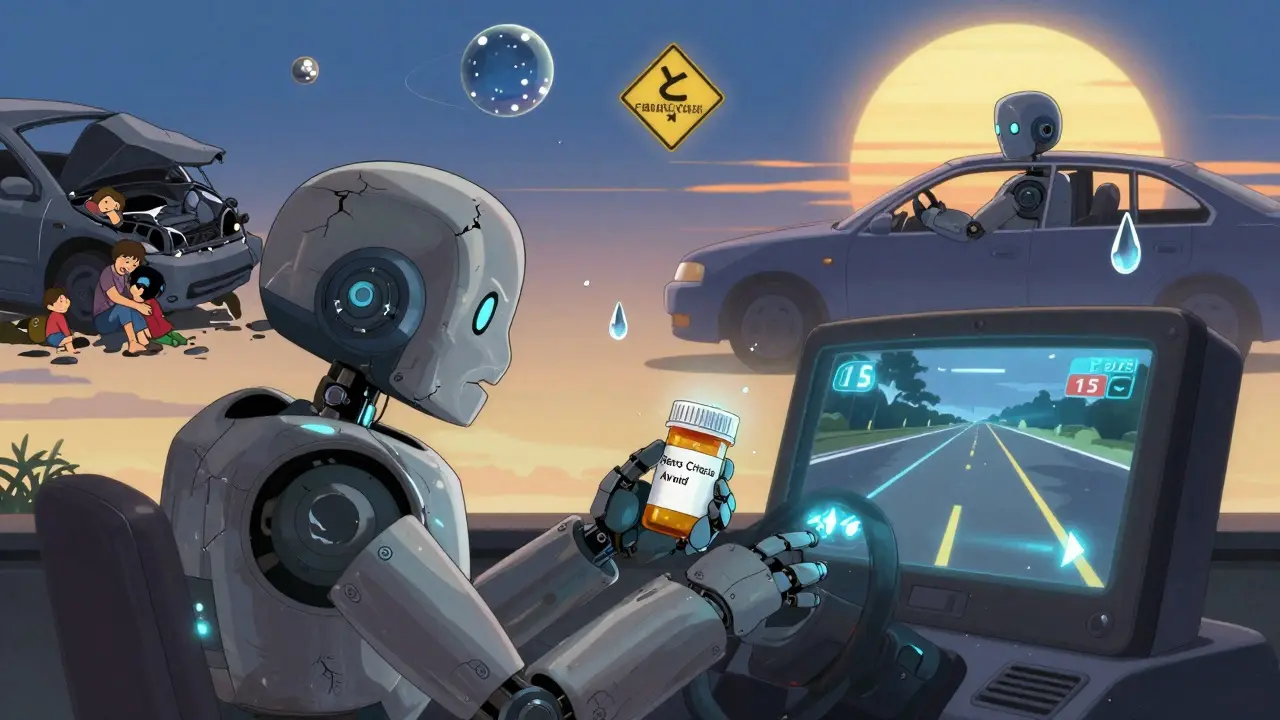
What You Can Do to Stay Safe
You don’t have to give up your meds. But you need to be smart about them.- Ask your doctor or pharmacist: “Can this medicine make me unsafe to drive?” Don’t assume they’ll bring it up. Be direct.
- Check the label for the Driving Risk Score: If it’s 4 or 5, avoid driving for at least 8-12 hours after taking it.
- Wait longer than you think: If you took a sleep aid at night, don’t drive the next morning unless you’re 100% sure you’re fully alert. Use a driving simulator test from the University of Iowa as a guide-can you complete 15 maneuvers without drifting more than 1.5 lanes? If not, wait.
- Never mix meds with alcohol: Even one drink can turn a mild side effect into a dangerous one.
- Track your own reactions: After starting a new med, take a short drive with a passenger who can tell you if you seem off. Slower reactions, zoning out, or feeling unusually tired are red flags.
Vinayak Naik
January 5, 2026 AT 22:06Man, I thought NyQuil was just for sleep till I drove to the store after taking it and nearly hit a mailbox. Felt like I was driving through molasses. My buddy said I was slurring even when I wasn't talking. That diphenhydramine is a silent killer on the road. Never touch it before driving again. 🤯
Saylor Frye
January 6, 2026 AT 23:15Let’s be real-this is just another case of the FDA overregulating common sense. If you can’t tell you’re impaired, maybe you shouldn’t be driving anyway. The real issue is people treating their bodies like disposable RC cars. Also, ‘Driving Risk Scores’? How cute. Next they’ll label coffee as ‘Level 3: May cause caffeine jitters.’
Jeane Hendrix
January 8, 2026 AT 02:41Interesting that the FDA only started requiring Driving Risk Scores in May 2023-why did it take so long? And why aren’t pharmacists mandated to counsel every patient? The system is fragmented. I’ve seen patients on 7 meds, no one warned them about CNS depression synergy. The real failure isn’t the drugs-it’s the lack of coordinated care. We’re treating symptoms, not the whole pharmacokinetic ecosystem.
Tom Swinton
January 10, 2026 AT 01:28Okay, I just want to say-this article hit me right in the soul. I used to take Xanax before long drives because I got anxious on the highway, and I thought, ‘I’m fine, I’m used to it.’ Then one day, I missed my exit, stared at a tree for 10 minutes like it was a painting, and woke up crying because I didn’t remember how I got there. I stopped driving for three months. Talked to my doctor. Switched to therapy. I’m not saying everyone should quit meds-but please, please, please, check your brain before you check your mirrors. Your life-and someone else’s-depends on it.
Kiran Plaha
January 10, 2026 AT 04:43My uncle in Delhi takes 4 pills a day and still drives to market. He says, ‘I’ve done it for 20 years.’ But his eyes are always red. I told him once, ‘Uncle, if you crash, we all lose.’ He just laughed. People don’t believe it until it’s too late.
Amy Le
January 10, 2026 AT 10:43USA: where you can buy a gun easier than you can get a warning label that says ‘Don’t Drive After This.’ 🇺🇸🔥
Pavan Vora
January 11, 2026 AT 13:58In India, we call this ‘dadi ka ilaj’-grandma’s remedy. NyQuil? Benadryl? Everyone uses it like water. No one checks the fine print. My cousin drove to hospital after taking it for cold… crashed into a rickshaw. Now he walks with a cane. The label says ‘may cause drowsiness.’ May? It’s guaranteed.
Indra Triawan
January 12, 2026 AT 03:59It’s not just the drugs… it’s the system. The system doesn’t care if you live or die. It just wants you to keep buying pills. And then when you crash? They’ll blame you. But who told you to take it? No one. No one ever says, ‘Hey, this might kill you.’ We’re all just… numb.
Susan Arlene
January 12, 2026 AT 10:44Been on amitriptyline for 5 years. Still drive. Feel fine. But I don’t drive at night. Or after lunch. Or if I’m tired. Simple. No drama. Just know your body.
Joann Absi
January 12, 2026 AT 13:10They’re coming for your meds next. 😭 First they took your sugar, now your sleep aids. Next it’ll be ‘No driving after eating carbs.’ They want you sedated and compliant. Wake up, sheeple. 🚗💊 #FreeMyPills
Mukesh Pareek
January 13, 2026 AT 19:41Statistically, the 22% polypharmacy rate in trauma centers is a direct result of fragmented prescribing. This isn’t patient negligence-it’s systemic polypharmacy malpractice. The CYP450 enzyme interactions are not being monitored. You need pharmacogenomic screening, not vague ‘Driving Risk Scores.’
Gabrielle Panchev
January 15, 2026 AT 02:48Wait-so you’re saying that if I take ibuprofen and then drive, I’m statistically more likely to crash? But I’ve been doing it for 15 years and never had an issue. So what? Are we now criminalizing normal life? Next they’ll say ‘don’t drive after eating a banana’ because it might cause potassium spikes. This is absurd. The real danger is fear-mongering disguised as public safety.
Katelyn Slack
January 16, 2026 AT 10:05my doctor never said anything about driving... i just assumed it was fine. now i check every label. even if it says 'drowsiness possible' i wait 8 hours. better safe than sorry.
Melanie Clark
January 17, 2026 AT 06:54Did you know the pharmaceutical companies fund most of the research that says these drugs are ‘safe’? The FDA is a revolving door. They’re not protecting you-they’re protecting profits. The ‘Driving Risk Scores’? A PR stunt. They’ll never make the big ones like Xanax or Ambien carry a 5. They’d lose billions. This is all a distraction. The real problem? Corporate greed. And they’re watching you right now.
Harshit Kansal
January 18, 2026 AT 00:15Just stopped driving after my new sleep med. Took a bus for a week. Felt weird at first but honestly? Less stress. And I slept better. Who knew? Maybe the car isn’t worth the risk.