
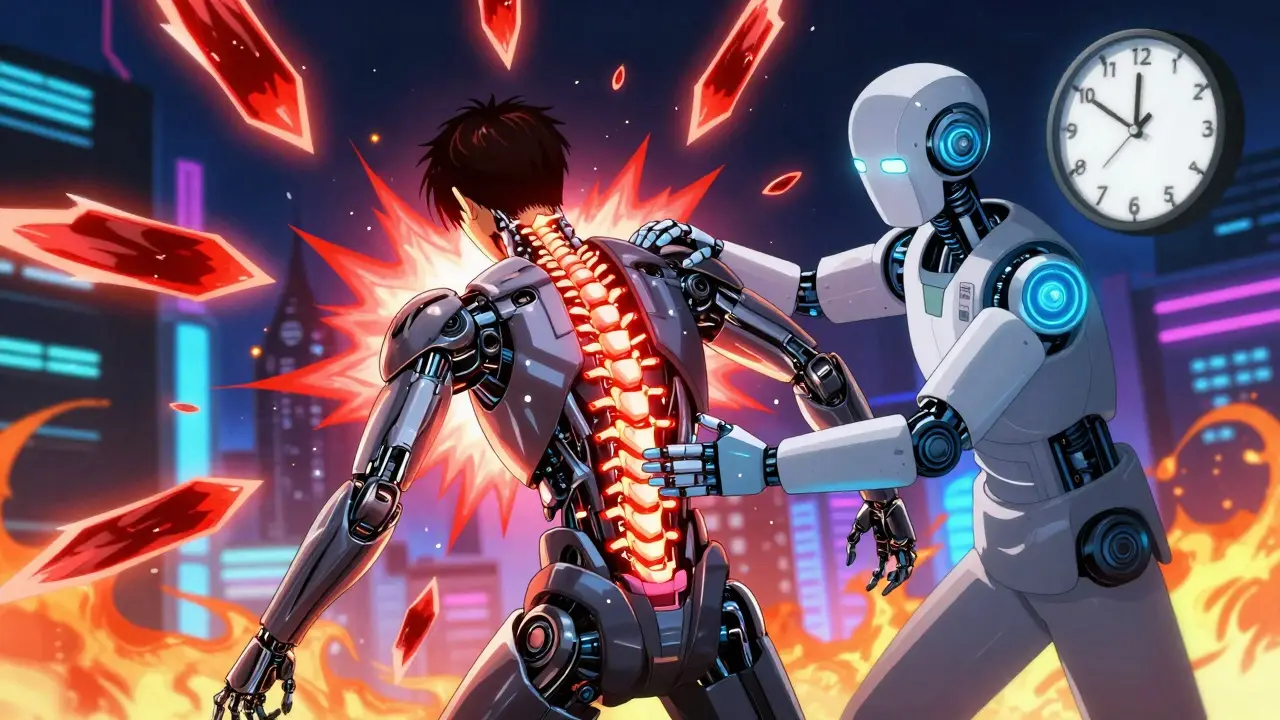
Most people will experience low back pain at some point. It’s not rare-it’s normal. But here’s the thing: not all back pain is the same. The difference between acute back pain and chronic back pain isn’t just about how long it lasts. It’s about what’s happening inside your body, and that changes everything when it comes to treatment-especially physical therapy.
What Exactly Is Acute Back Pain?
Acute back pain hits fast and hard. You twist wrong lifting a suitcase. You bend over to pick up a toy and something snaps. Suddenly, your lower back is on fire. This isn’t just discomfort-it’s sharp, localized, and often limits movement. If you’ve had this before, you know the feeling: you can’t tie your shoes, stand up straight, or even laugh without wincing. By definition, acute back pain lasts less than four weeks. Most cases resolve on their own within 2 to 6 weeks. Around 90% of people with a herniated disc or muscle strain see full recovery without surgery or specialist care. The cause is usually clear: a strained ligament, a sprained muscle, or a minor joint irritation. No major damage. No nerve destruction. Just tissue that got overloaded and needs time to heal. But here’s the critical part: how you respond in those first few days determines whether this becomes a long-term problem.Chronic Back Pain Is a Different Beast
Now imagine this: you had that same episode six months ago. The swelling went down. The bruise faded. But the pain? It never really left. It’s dull now-not sharp. More like a constant ache in your lower spine, sometimes radiating down your leg. You’ve tried heat, rest, painkillers, even acupuncture. Nothing fully fixes it. You’re not injured anymore, but you still hurt. That’s chronic back pain. Defined as pain lasting more than 12 weeks, it’s not about tissue damage anymore. It’s about your nervous system. Your brain and spinal cord have become hypersensitive. They’re stuck in alarm mode. Even normal movements-like bending to reach a shelf-trigger pain signals because your nervous system now interprets them as threats. This is called central sensitization. It’s real. It’s measurable. And it’s why two people with the same MRI results can have wildly different pain levels. One feels fine. The other can’t get out of bed. About 10 to 20% of people with acute back pain end up here. That’s not a small number. It’s millions of people every year.Physical Therapy for Acute Back Pain: The Window of Opportunity
When you have acute back pain, physical therapy isn’t about fixing broken parts. It’s about preventing your body from learning pain. Studies show that starting physical therapy within 72 hours of onset reduces the chance of chronic pain by 22%. If you wait more than 16 days, your risk of turning acute into chronic jumps by 38%. That’s not a coincidence-it’s biology. Early physical therapy for acute pain focuses on three things:- Movement re-education: Learning how to move safely again without fear.
- Graded activity: Slowly increasing daily tasks-walking, standing, bending-without overdoing it.
- Pain modulation: Using ice, heat, or gentle mobilization to calm the nervous system.
Physical Therapy for Chronic Back Pain: Rewiring the System
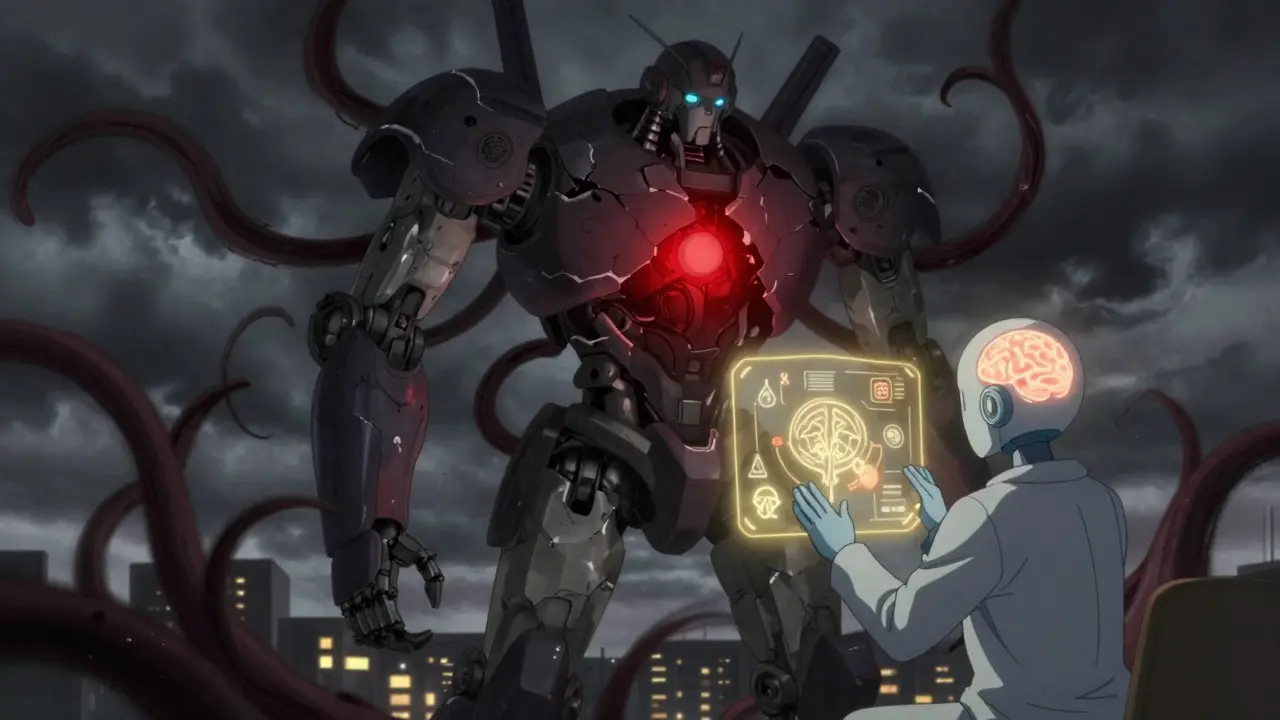
Chronic pain doesn’t respond to the same treatment. You can’t stretch your way out of a nervous system stuck in overdrive. Physical therapy for chronic back pain is more complex. It takes longer-15 to 25 sessions over 8 to 12 weeks-and it’s not just about muscles. It’s about your brain. The most effective approach combines movement with pain neuroscience education. That’s a fancy term for teaching you how pain actually works. You learn that pain isn’t always a sign of damage. You learn that fear of movement makes pain worse. You learn that your body isn’t broken-it’s just confused. One patient, Sarah, had been to 20 PT sessions over five months. She told me: “I only have 30% relief.” But when her therapist added pain neuroscience education, everything changed. She started understanding why her pain persisted. She stopped avoiding stairs, lifting, or even sitting for long periods. Her pain didn’t vanish-but her life got better. She went from “I can’t do anything” to “I can do most things, just slower.” Success rates for chronic pain are lower than for acute: only 30 to 50% report meaningful pain reduction. But 60 to 70% see functional improvement. That’s huge. It means you can work, play with your kids, or sleep through the night-even if you still feel some discomfort.Why Timing Matters More Than Anything Else
Here’s the hard truth: physical therapy for acute back pain is preventative. For chronic back pain, it’s damage control. The American College of Physicians and the American Physical Therapy Association both agree: physical therapy should be first-line treatment for both. But the goals are different.- For acute pain: Prevent chronicity. Restore function fast.
- For chronic pain: Reduce suffering. Rebuild confidence. Re-engage with life.
What Physical Therapy Actually Looks Like
For acute pain:- Week 1: Gentle walking, breathing exercises, avoiding painful positions.
- Week 2: Core activation, hip mobility drills, light resistance.
- Week 3-4: Returning to daily activities with proper form.
- Weeks 1-2: Pain education. Learning why pain persists. Identifying fear-avoidance patterns.
- Weeks 3-6: Graded exposure. Slowly reintroducing feared movements-like bending or lifting-with support.
- Weeks 7-12: Functional retraining. Returning to work, hobbies, exercise.
What the Data Says About Success
Let’s look at real outcomes:- 82% of patients with acute back pain report major improvement after 4-6 PT sessions.
- Only 58% of chronic pain patients say they got meaningful relief-even after 20+ sessions.
- 89% of people who started PT within 7 days of acute pain were satisfied. Only 27% of those who waited 3+ weeks were.
- 71% of positive chronic pain reviews mentioned pain education as the key factor.
What You Should Do Right Now
If you’re in pain right now:- Acute pain (under 4 weeks): See a physical therapist within 72 hours. Don’t wait. Don’t rely on rest alone. Move gently. Stay active.
- Chronic pain (over 12 weeks): Look for a therapist trained in pain neuroscience. Ask if they use the STarT Back tool or offer pain education. Avoid therapists who only do massage or stretching without explaining why.
What’s Changing in 2026
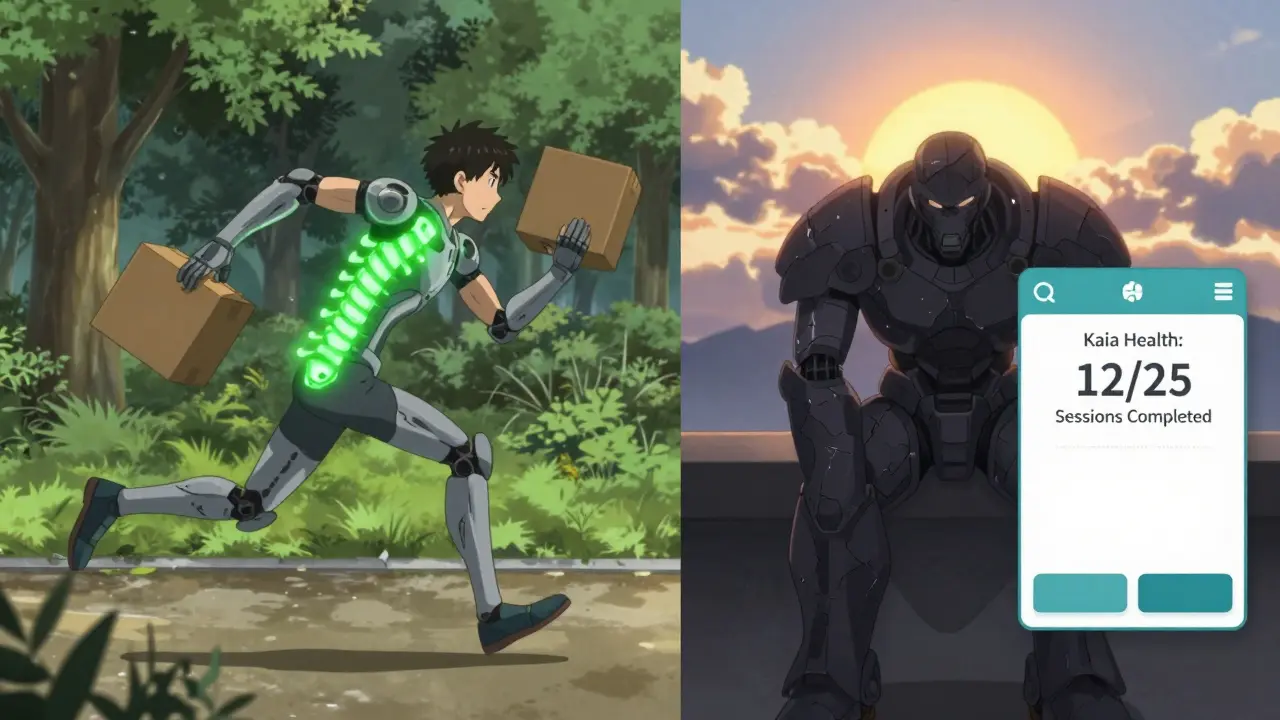
Medicare now pays bonuses to physical therapists who prevent acute pain from becoming chronic. New billing codes for chronic pain management came into effect in January 2024. Digital tools like Kaia Health-FDA-cleared apps that guide you through PT exercises via AI-are now covered by some insurers. The message is clear: physical therapy isn’t just a last resort. It’s the most effective, safest, and most cost-efficient way to manage back pain-if you act fast.How do I know if my back pain is acute or chronic?
Acute back pain lasts less than four weeks and usually starts after a clear injury-like lifting something heavy or twisting wrong. It’s often sharp and gets better with rest and gentle movement. Chronic back pain lasts more than 12 weeks, even after the original injury healed. It’s usually a dull, constant ache that doesn’t improve with rest alone and may be linked to fear of movement or stress.
Can physical therapy cure chronic back pain?
Physical therapy rarely "cures" chronic back pain in the sense of making it disappear completely. But it can significantly reduce pain intensity by 30-50% and improve function in 60-70% of cases. The goal isn’t to eliminate every sensation of discomfort-it’s to help you live well despite it. Many people return to work, exercise, and daily activities they thought were lost forever.
Why does physical therapy work better for acute back pain?
Because the nervous system hasn’t had time to rewire itself. In acute pain, tissues are healing, and the brain hasn’t learned to overreact yet. Early physical therapy teaches your body to move safely again before pain signals become automatic. Once chronic pain sets in, the brain and spinal cord have changed. Treatment then must focus on retraining the nervous system, which takes longer and is less predictable.
Should I get an MRI for my acute back pain?
No-not unless you have red flags like loss of bladder control, unexplained weight loss, or numbness in both legs. Most acute back pain is caused by muscle strains or minor joint irritation, which don’t show up on MRIs anyway. Getting an MRI too early increases anxiety, leads to unnecessary treatments, and actually raises your risk of developing chronic pain by 27%.
How long does physical therapy for back pain usually take?
For acute pain, most people need 6 to 12 sessions over 3 to 6 weeks. For chronic pain, it’s typically 15 to 25 sessions over 8 to 12 weeks. The difference isn’t just in length-it’s in focus. Acute therapy gets you moving again. Chronic therapy helps you understand why you still hurt and how to live with it without fear.
What should I look for in a physical therapist for back pain?
For acute pain, look for someone skilled in mechanical diagnosis-someone who can tell you which movements ease or worsen your pain. For chronic pain, find a therapist with training in pain neuroscience education. Ask if they use tools like the STarT Back questionnaire or explain how pain works in the brain. Avoid therapists who only give you exercises without explaining the "why."
Christina Widodo
January 11, 2026 AT 11:02My back went out last year after lifting my toddler and I waited three weeks to see a PT because I thought rest would fix it. Big mistake. The pain turned into this dull hum that never left. When I finally went, the therapist spent the first session just explaining how my brain got scared of movement. That was the turning point. I didn’t need more stretches-I needed to unlearn fear.
Alice Elanora Shepherd
January 12, 2026 AT 17:37I’ve been a physio for 18 years, and this post nails it. So many patients come in after months of avoiding movement, convinced their spine is ‘falling apart.’ The MRI shows nothing serious-but their nervous system? It’s screaming. Early PT isn’t just helpful-it’s preventative medicine. Don’t wait for the pain to become your identity.
Sona Chandra
January 13, 2026 AT 02:47Ugh. Another ‘just move more’ guru. My husband had chronic pain for 7 years. He did 47 PT sessions, yoga, acupuncture, cryotherapy, and still can’t sit through a movie. You think it’s about ‘nervous system rewiring’? It’s about your body being broken. And no amount of ‘education’ fixes that. You’re just selling hope to desperate people.
Katherine Carlock
January 15, 2026 AT 01:19Thank you for this. I’m a nurse and I see so many patients told to ‘just rest’ for back pain. Then they end up on opioids. I wish every ER doc would hand out a pamphlet like this. My mom had acute pain after gardening-went to PT within 48 hours. Five sessions. Back to her roses. No meds. No drama. Just smart movement.
beth cordell
January 15, 2026 AT 02:20THIS. 🙌 I used to think PT was just massages and weird machines. Then I got chronic pain after a car accident. My therapist taught me that pain ≠ damage. That changed everything. Now I lift my kids again. I cry sometimes when I think about how close I came to giving up. Thank you for writing this.
Jennifer Phelps
January 16, 2026 AT 21:56So if I have acute pain I should go to PT in 72 hours but if I wait longer it becomes chronic and PT is less effective? Why isn’t this common knowledge? Why do doctors still tell people to take ibuprofen and wait? This needs to be on every health website
Rinky Tandon
January 17, 2026 AT 02:46Oh please. You’re just rebranding fear-based avoidance as ‘neuroscience.’ My cousin did 20 sessions and still can’t bend over. The real issue? Lazy people who don’t want to work. PT is a cash grab for people who refuse to just tough it out. Stop over-medicalizing normal pain. Your spine isn’t a fragile vase.
Lauren Warner
January 18, 2026 AT 00:19Let’s be real. The 22% reduction stat is cherry-picked. Most studies show no significant difference between early PT and watchful waiting for acute pain. And chronic pain? The placebo effect is huge. People feel better because they were told they’re not broken. That’s not treatment. That’s psychology. And it doesn’t fix structural issues.
Prachi Chauhan
January 18, 2026 AT 00:28It’s like when you burn your hand. At first you pull away. But if you keep touching the stove because you think it’s still hot-even after the burn healed-you keep getting hurt. That’s chronic pain. Your brain forgot it was safe. PT doesn’t fix the hand. It teaches the brain: the stove is cool now.
Lelia Battle
January 18, 2026 AT 05:19One of the most thoughtful pieces I’ve read on this topic. I’ve worked with chronic pain patients for over a decade. The shift from ‘fix the tissue’ to ‘retrain the system’ is profound. It’s not magic. It’s science. And it’s deeply human. Thank you for honoring the complexity of pain instead of reducing it to a mechanical problem.
Craig Wright
January 19, 2026 AT 10:10As a British man who has suffered from back pain for 15 years, I find this article overly Americanized. We don’t need ‘neuroscience education.’ We need discipline. Rest. Cold showers. And stop whining. The NHS doesn’t pay for 25 sessions of talking. We fix it with grit. And if you can’t? Well, that’s life.
steve ker
January 20, 2026 AT 19:19TL;DR: Go to PT early or suffer later. I’ve read enough. I’m going to the gym.