

Every year, your insurance plan changes what drugs it covers and how much you pay for them. For many people on Medicare Part D, these changes aren’t just paperwork-they can mean your insulin, arthritis med, or heart medication suddenly costs hundreds more. Starting January 1, 2025, the biggest shifts in prescription drug coverage in over a decade kick in. And if you’re taking any brand-name drugs, especially for chronic conditions, you’re likely to see a switch to a generic or biosimilar-whether you asked for it or not.
What Exactly Is a Formulary Update?
A formulary is just a list of drugs your insurance will pay for. Think of it like a menu: only the items on the list are covered. Every year, insurance companies and pharmacy benefit managers (PBMs) update this list. They might move a drug to a higher tier (meaning you pay more), drop it entirely, or require you to try another drug first. These changes happen behind the scenes, but they hit you at the pharmacy counter. In 2025, these updates are bigger than ever. Thanks to the Inflation Reduction Act of 2022, Medicare Part D plans can no longer charge you more than $2,000 out-of-pocket for prescriptions all year. That’s a win. But to make that possible, insurers are pushing harder than ever to get you onto cheaper generics and biosimilars. It’s not about saving you money-it’s about saving the plan money, and you’re the one who has to adapt.How Drug Tiers Work in 2025
Your plan sorts drugs into tiers. The lower the tier, the less you pay. Here’s what you’re likely to see in 2025:- Tier 1 (Preferred Generics): $1-$10 copay. These are the cheapest, most common drugs. If you’re on a brand-name drug, this is where your insurer wants you to land.
- Tier 2 (Non-Preferred Generics / Preferred Brands): Around $47. This is where some older brand-name drugs still hang on-if they don’t have a generic yet.
- Tier 3 (Non-Preferred Brands): $113 on average. These are the drugs your insurer really wants you to stop taking.
- Specialty Tier: $113 or 25% coinsurance. These are expensive drugs for conditions like cancer, rheumatoid arthritis, or multiple sclerosis.
Why You’re Being Switched to Generics
It’s not random. Insurers are under pressure to cut costs. The Inflation Reduction Act forces them to cap out-of-pocket spending, so they’re turning to generics and biosimilars to keep the math working. Biosimilars are like generics for complex biologic drugs-think Humira, Enbrel, or insulin. They’re not exact copies, but they work the same way and cost 15-70% less. CVS Caremark, one of the biggest pharmacy benefit managers, dropped nine specialty drugs in 2025 and added 18 new ones-11 of them biosimilars. That includes drugs like Kanjinti and Trazimera, which replace older, pricier versions like Herzuma and Ogivri. UnitedHealthcare moved Humalog insulin to a higher tier, making it cost $113 instead of $35 for some members. Meanwhile, people who switched from Humira to Amjevita (a biosimilar) report saving $450 a month with no drop in effectiveness. The FDA has made it easier for insurers to use biosimilars-even without the official “interchangeable” label. That means more switches, faster.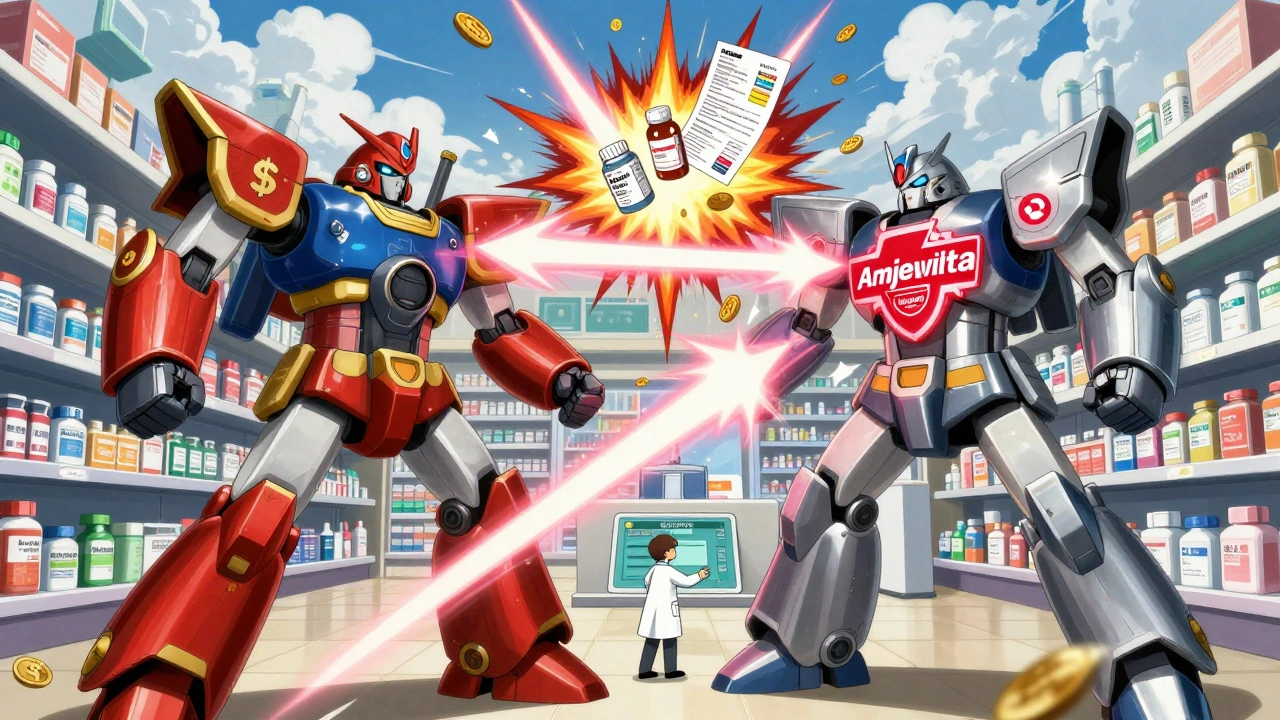
What Happens If Your Drug Gets Dropped?
If your drug is removed from the formulary entirely, your insurer must give you at least 60 days’ notice. But here’s the catch: they’re allowed to make changes immediately if a new generic just got approved. In that case, you might only get 30 days’ warning. You won’t be left without medication. You’ll get a 30-day transitional supply so you can talk to your doctor. But that’s it. After that, you have to either switch to the generic, file an exception, or pay full price. Filing an exception means asking your insurer to keep covering your current drug. Your doctor has to prove it’s medically necessary. In 2024, 82% of tiering exceptions were approved. But if your drug was completely removed, only 47% of requests were approved. That’s a big difference. If your drug is gone, the odds are stacked against you.How to Prepare Before January 1, 2025
Don’t wait until your pill bottle is empty. Here’s what to do now:- Check your plan’s formulary between October and December. Every insurer sends a notice called a Summary of Coverage (SOC). Look for your medications on the list. Note the tier and any restrictions.
- Call your pharmacist. They see these changes every day. Ask: “Is my drug staying on the formulary? Is there a cheaper alternative?”
- Talk to your doctor. If your drug is being switched, ask: “Is there a generic or biosimilar that works just as well?” Don’t assume your current drug is the only option.
- Know your exception rights. If you’re switched and it’s not working, your doctor can file a fast exception. For urgent cases, it’s processed in 24 hours.
- Check your out-of-pocket costs. With the $2,000 cap, you might end up paying less overall-even if your copay goes up. Track your spending. You might be closer to the cap than you think.
Who Gets Hit Hardest?
People with chronic conditions-diabetes, arthritis, asthma, cancer-are the most affected. In Medicare.gov forums, 42% of respondents said they’re most worried about changes to their diabetes meds. For many, insulin is non-negotiable. When UnitedHealthcare moved Humalog to a higher tier, one member wrote: “My copay jumped overnight. I had to choose between my insulin and my rent.” Older adults on fixed incomes, people taking multiple medications, and those without strong support systems are at highest risk. A 2024 study found that non-medical switching (changes made by insurers, not doctors) increased by 23% in just one year. That’s not a coincidence. It’s a strategy.What’s Coming in 2026
The next wave is even bigger. Starting January 1, 2026, Medicare Part D plans must cover 10 drugs that the government negotiated prices for. These include Stelara (for psoriasis), Prolia (for osteoporosis), and Xolair (for asthma). The government forced the makers to lower prices by at least 25%. But here’s the twist: insurers will likely push you toward biosimilar versions as soon as they’re available. That means more switches, more confusion, more paperwork. By 2027, experts predict nearly half of all targeted biologic drugs will be replaced by biosimilars. That’s good for the system. But for you? It means you’ll need to stay on top of your plan changes every year.Bottom Line: You’re Not Powerless
Insurance companies are trying to save money. You’re trying to stay healthy. These goals don’t have to clash-but they won’t align unless you act. You can’t stop formulary changes. But you can control how you respond. Know your drugs. Know your plan. Ask questions. Don’t let a letter from your insurer dictate your health. Talk to your pharmacist before your refill runs out. Ask your doctor if a cheaper option will work. File an exception if you need to. And track your spending-you might be closer to the $2,000 cap than you think. The system is designed to push you toward generics. That’s not always bad. But it’s not always safe either. Stay informed. Stay involved. Your health depends on it.What if my insurance switches me to a generic I don’t want?
You don’t have to accept it. Your doctor can file an exception request with your insurer, explaining why the original drug is medically necessary. If approved, you’ll keep your current medication. For urgent cases, the process can be completed in 24 hours. If denied, you can appeal or pay out-of-pocket temporarily while exploring alternatives.
Are biosimilars safe to use instead of brand-name drugs?
Yes. Biosimilars are rigorously tested by the FDA to show they work the same way as the original biologic drug-with no clinically meaningful differences in safety or effectiveness. Thousands of patients have switched from Humira to Amjevita or Enbrel to Cimzia with no loss of control over their condition. The FDA now allows insurers to cover biosimilars even without the "interchangeable" label, because the evidence shows they’re reliable.
How do I know if my drug is being removed from my plan?
Your insurer must send you a written notice at least 60 days before a change takes effect-unless it’s a newly approved generic, in which case you get 30 days. Check your mail, email, and online portal between October and December. You can also call your plan directly or ask your pharmacist to check the formulary for you.
Will switching to a generic lower my out-of-pocket costs?
Usually, yes. Preferred generics cost $1-$10 per prescription in 2025. Even non-preferred generics are far cheaper than brand-name drugs, which average $113 or more. If you’re near the $2,000 annual out-of-pocket cap, switching to a generic can help you reach it faster-and then your drugs become free for the rest of the year.
Can I switch back to my original drug if the generic doesn’t work?
Yes. If you experience side effects or your condition worsens after switching, your doctor can file an exception request to get your original drug covered again. You’ll need documentation showing the generic didn’t work. Most plans approve these requests if there’s clear medical evidence. Don’t wait until you’re in crisis-act as soon as you notice a problem.
Marvin Gordon
December 5, 2025 AT 02:04Just got my 2025 formulary notice. My insulin’s moving to Tier 3. $113 a month? That’s a rent payment. I’m not switching. My doctor’s filing an exception. Period.
Don’t let them bully you into a cheaper pill that doesn’t work. You know your body better than some algorithm in a corporate office.
Mark Curry
December 6, 2025 AT 13:21Been on Humira for 8 years. Switched to Amjevita last year. No difference. Saved $400/month. I’m not mad. I’m grateful.
They’re not trying to hurt us. They’re trying to keep the system alive. We just gotta adapt.
Mark Ziegenbein
December 8, 2025 AT 06:28Let me be perfectly clear-this entire formulary restructuring is a neoliberal farce dressed up as consumer protection. The Inflation Reduction Act didn’t lower drug prices-it just shifted the burden from insurers to patients through forced substitution, all while corporate PBMs pocket the savings through opaque rebates and tiered kickbacks. The FDA’s loosening of biosimilar approval standards? A regulatory capture masterpiece. We’re not being saved-we’re being exploited under the banner of ‘affordability’
And don’t even get me started on how CVS Caremark and UnitedHealthcare are playing god with chronic disease management like it’s a spreadsheet optimization problem. This isn’t healthcare. It’s actuarial theater.
Ada Maklagina
December 8, 2025 AT 13:54My mom got switched to a biosimilar for her RA meds. She was scared at first. Now she says she feels the same. Cheaper. Less stress. Win.
Just check with your doc. That’s all.
James Moore
December 10, 2025 AT 09:41Who do these people think they are-telling Americans what medicine they can take? This is socialism creeping into our prescriptions. The government’s got its hands in our pill bottles now. Next thing you know, they’ll decide if we’re ‘worthy’ of insulin. We’re not cattle for the PBM slaughterhouse. This is tyranny wrapped in a医保 pamphlet.
And don’t tell me ‘it’s cheaper’-freedom isn’t a copay.
Kylee Gregory
December 11, 2025 AT 10:08I think the real issue here isn’t generics or biosimilars-it’s transparency. Why don’t insurers send these notices in plain language? Why do we have to dig through 50-page PDFs just to find out if our meds are still covered?
Maybe the fix isn’t fighting the switch-it’s demanding better communication. We’re not stupid. We just want to understand.
Michael Dioso
December 13, 2025 AT 02:25You’re all missing the point. The real scam is that you think this is about ‘affordability.’ Nah. It’s about control. The PBMs own the formularies. The doctors are pressured. The FDA is cozy. And you? You’re the mark. You think switching to Amjevita is safe? What if the ‘no clinically meaningful difference’ is a lie? What if the long-term effects aren’t studied? Who’s paying for that research? Not you. Not them. It’s all smoke and mirrors.
Don’t be fooled. This isn’t progress. It’s a slow-motion medical heist.
Stephanie Bodde
December 14, 2025 AT 11:23Hey, if you’re worried about your meds-don’t panic. Call your pharmacist. Ask your doctor. File the exception if you need to. You’ve got rights.
And hey-you’re not alone. We’ve all been there. You got this 💪
Philip Kristy Wijaya
December 16, 2025 AT 01:05One must consider the geopolitical implications of this formulary restructuring in the context of global pharmaceutical supply chains and the erosion of American intellectual property sovereignty. The FDA’s expedited biosimilar approvals, while ostensibly benign, represent a quiet capitulation to foreign manufacturing interests and the commodification of biological therapeutics-a process that, if left unchecked, may lead to a systemic degradation of clinical efficacy standards across the Western medical apparatus.
And yet, the average citizen remains blissfully unaware, scrolling through TikTok while their insulin becomes a luxury item. The tragedy is not the copay increase. It is the apathy.
Mellissa Landrum
December 17, 2025 AT 22:20They’re putting microchips in the generics. I heard it from a nurse. They track your meds. Then they use it to raise your premiums. You think this is about money? Nah. It’s about control. The government’s watching. The PBMs are listening. And they’re gonna make you take the cheap stuff whether you like it or not.
Don’t trust the ‘FDA says it’s safe’ BS. That’s what they said about cigarettes too.
Manish Shankar
December 19, 2025 AT 17:41As a physician in India, I see similar pressures on drug access, though without the formal tiering systems. The principle remains: affordability must not compromise safety. I commend the efforts to introduce biosimilars, but only when accompanied by robust post-market surveillance and patient education. The human element-trust between doctor and patient-must not be sacrificed at the altar of cost-efficiency.
luke newton
December 21, 2025 AT 08:48People who take insulin are weak. They should just tough it out. If you can’t afford your meds, maybe you shouldn’t have gotten sick. This country doesn’t owe you a pill.
Why are you even on Medicare? You should’ve saved more. Now you’re crying because your copay went up. Grow up.
Ali Bradshaw
December 22, 2025 AT 15:10My dad’s on 7 meds. Got his 2025 notice last week. We spent two hours on the phone with his pharmacist. Found a biosimilar that’s covered and cheaper. He’s doing fine. Just took a little legwork.
Don’t wait until the last minute. Do the work now. It’s worth it.
an mo
December 23, 2025 AT 18:30Formulary optimization via biosimilar displacement is a classic cost-containment strategy leveraging pharmacoeconomic modeling and tiered reimbursement architectures. The marginal utility of brand-name biologics is demonstrably lower than that of biosimilars in real-world outcomes, per CMS claims data from Q3 2024. The $2,000 cap is a fiscal anchor, not a patient benefit-it’s designed to reduce utilization variance and increase plan predictability.
Resistance is statistically insignificant. Adaptation is the only rational equilibrium.