

Side Effect Frequency Calculator
This tool converts vague side effect terms (like "common" or "rare") into specific frequency ranges based on medical standards. Use it to prepare precise questions for your doctor.
Imagine this: you’re handed a new prescription. The doctor says, "Common side effects include headache and dizziness." You nod, take the script, and leave. Two days later, you get a pounding headache. You panic. Was this normal? Should you stop taking it? Did your doctor even tell you the truth? You’re not alone. Most people leave the office with more questions than answers about what their meds might do to them.
Why Most Doctors Don’t Tell You the Whole Story
It’s not that doctors are hiding anything. They’re stretched thin. In a typical 15-minute appointment, they’re juggling diagnosis, treatment plans, follow-ups, and paperwork. Talking about side effects? That’s often squeezed into the last 90 seconds. And here’s the kicker: on average, doctors mention just 3.2 side effects per medication-even though most drugs have 15 to 25 possible ones listed in the official data. But here’s what’s really happening: patients want to know. A 2015 study found that 90% of people expect their doctor to talk about side effects. Yet only 75% are told about serious ones, and just 66% hear about the common ones. That gap isn’t just a communication issue-it’s a safety issue. About 68% of people stop taking their meds because they got hit with a side effect no one warned them about.What Side Effect Burden Really Means
"Side effect burden" isn’t just a fancy term. It’s the weight you carry when you’re constantly wondering: Is this headache from the drug? From stress? From nothing? Should I keep taking it? That mental load can be heavier than the physical symptoms themselves. Side effects aren’t all the same. There’s a big difference between:- Common side effects (happen to 1 in 10 to 1 in 3 people)-like nausea, drowsiness, or dry mouth.
- Severe side effects (happen to 1 in 1,000 or less)-like liver damage, heart rhythm problems, or severe allergic reactions.
What Patients Actually Want to Know
Not everyone wants the same level of detail. Some people want every possible risk spelled out. Others just want to know if something could kill them. Research shows:- 49% of patients want to hear about both common and serious side effects.
- 26% only care about the dangerous ones.
- 17% just want to know what’s likely to happen, even if it’s mild.
How to Ask the Right Questions (Without Wasting Time)
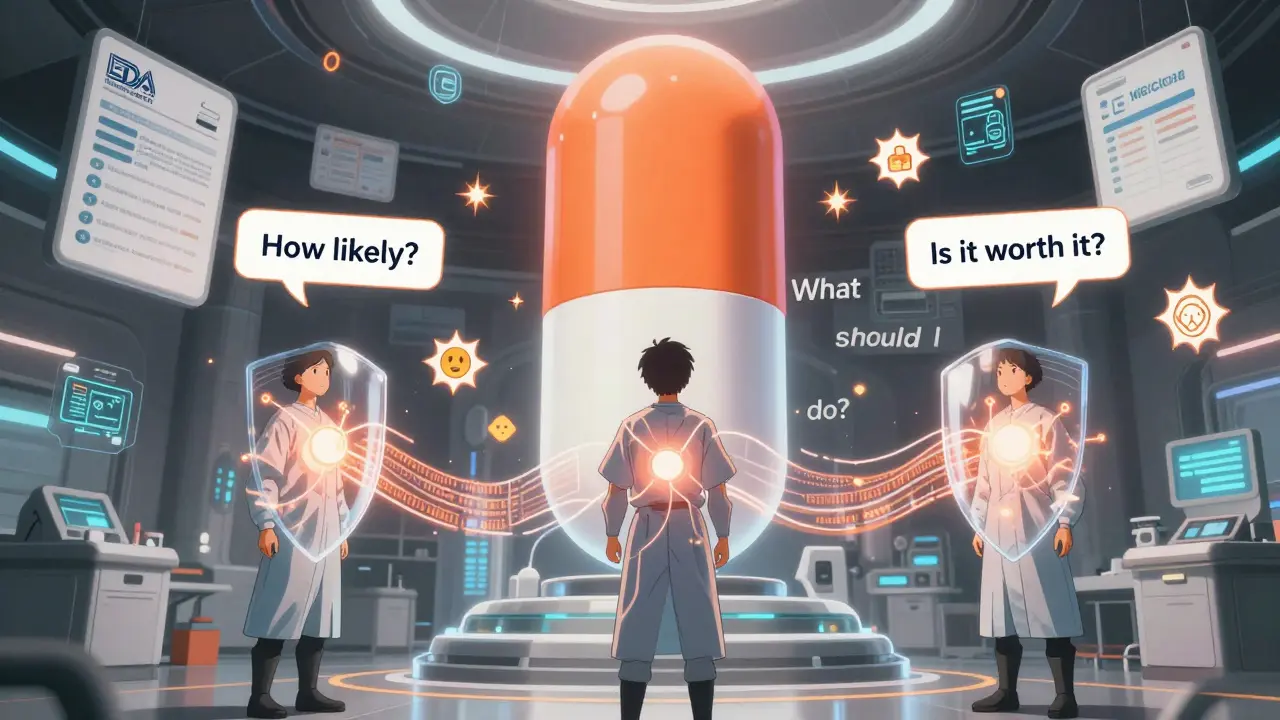
You don’t need to be an expert. You just need to ask the right three questions. Do this before the doctor leaves the room:- "How likely is this side effect?" Don’t accept "some people" or "it can happen." Ask: "Is this something 1 in 5 people get? 1 in 50?"
- "What should I do if I feel this?" Don’t just hear the problem-know the plan. "If I get dizzy, should I sit down? Call you? Stop the pill?"
- "Is this side effect worth the benefit?" For example: "I know this pill might give me headaches, but it stops my chest pain. Is that trade-off worth it for me?"
What to Do If You’re Already Off Your Meds
If you’ve stopped taking a drug because of a side effect you didn’t expect, don’t hide it. Don’t feel guilty. Say this:"I stopped taking [medication] because I had [side effect]. I didn’t know it could happen. Can we talk about whether it’s safe to try again, or if there’s another option?"
Doctors say this is the most helpful thing a patient can say. It opens the door. It’s not an accusation-it’s a collaboration. The American Medical Association even recommends this exact phrase in their training guides. And here’s a pro tip: if you’re on multiple meds (most people over 65 take 4 or more), ask for a medication review. Many clinics now have medical assistants who chat with you before you see the doctor. They ask: "Are you taking all your pills? Any weird symptoms?" This catches 63% of adherence issues that doctors would miss.
Technology Can Help-If You Use It
Your doctor’s office might have digital tools you’re not using:- Electronic health records often include printable side effect sheets for your meds.
- Some apps (like Medisafe) track your symptoms and can show you patterns: "You got headaches every time you took this pill on an empty stomach."
- Telehealth visits now often include pre-visit questionnaires that flag potential side effect risks before you even walk in.
The Bigger Picture: Why This Matters
Poor communication about side effects isn’t just a bad doctor-patient moment. It’s costing the U.S. healthcare system $100 to $289 billion a year in avoidable hospital visits, ER trips, and failed treatments. And it’s not just money-it’s quality of life. 15.7 million Americans quit necessary meds because of side effects they weren’t prepared for. The good news? Simple changes make a huge difference. When doctors use clear language, give numbers, and ask what you want to know, adherence goes up. Anxiety goes down. And people live longer, healthier lives. It’s not about overwhelming you with a 20-page list. It’s about giving you the facts you need to make your own choice-with confidence.What to Bring to Your Next Appointment
Before you go, write down:- All the meds you’re taking (including supplements).
- Any side effects you’ve had-even if you think they’re "not a big deal."
- One question for each medication: "What’s the most important thing I should know about how this affects me?"
What if my doctor says side effects are "rare" but I still got them?
"Rare" means different things to different people. In medical terms, it usually means 1 in 1,000 to 1 in 10,000. But if you’re the one person it happened to, it’s not rare for you. Ask your doctor: "Based on my health, am I in a higher-risk group?" Some people are more sensitive to certain drugs because of age, genetics, or other meds. Your experience matters-even if it’s "rare."
Can I ask my pharmacist instead of my doctor?
Yes-and you should. Pharmacists are trained to explain side effects in plain language. In fact, 51% of patients say they prefer getting side effect info from both their doctor and pharmacist. Your pharmacist can tell you how common a side effect is, what to watch for, and how to reduce it (like taking a pill with food). They’re often more available than your doctor and can answer questions without an appointment.
Why do some side effects get worse over time?
Some side effects, like dizziness or fatigue, can build up as your body adjusts. Others, like liver stress or nerve changes, may take weeks or months to show up. That’s why it’s important to check in with your doctor after 2-4 weeks on a new medication. Don’t wait until you’re miserable. A quick call or message can prevent a bigger problem.
Should I stop taking a drug if I have a side effect?
Never stop a prescription without talking to your doctor first. Some side effects are annoying but harmless (like dry mouth from blood pressure meds). Others can be dangerous if you quit cold turkey (like antidepressants or heart meds). Instead, call your doctor and say: "I’m having [symptom]. Is this expected? Should I adjust the dose or switch?"
How do I know if a side effect is serious enough to go to the ER?
Go to the ER if you have: chest pain, trouble breathing, swelling of the face or throat, sudden weakness or numbness, confusion, seizures, or severe rash with fever. These are signs of serious reactions. For milder symptoms like nausea or headache, call your doctor first. Most side effects aren’t emergencies-but if you’re unsure, it’s better to be safe.
laura Drever
January 14, 2026 AT 02:52Diana Campos Ortiz
January 14, 2026 AT 22:12Adam Rivera
January 16, 2026 AT 02:25James Castner
January 18, 2026 AT 01:15Angel Molano
January 19, 2026 AT 16:34Kimberly Mitchell
January 21, 2026 AT 05:51Vinaypriy Wane
January 21, 2026 AT 14:46Trevor Davis
January 22, 2026 AT 05:58lucy cooke
January 24, 2026 AT 04:59mike swinchoski
January 24, 2026 AT 14:41jefferson fernandes
January 25, 2026 AT 19:25Robin Williams
January 27, 2026 AT 03:08Pankaj Singh
January 27, 2026 AT 23:32