
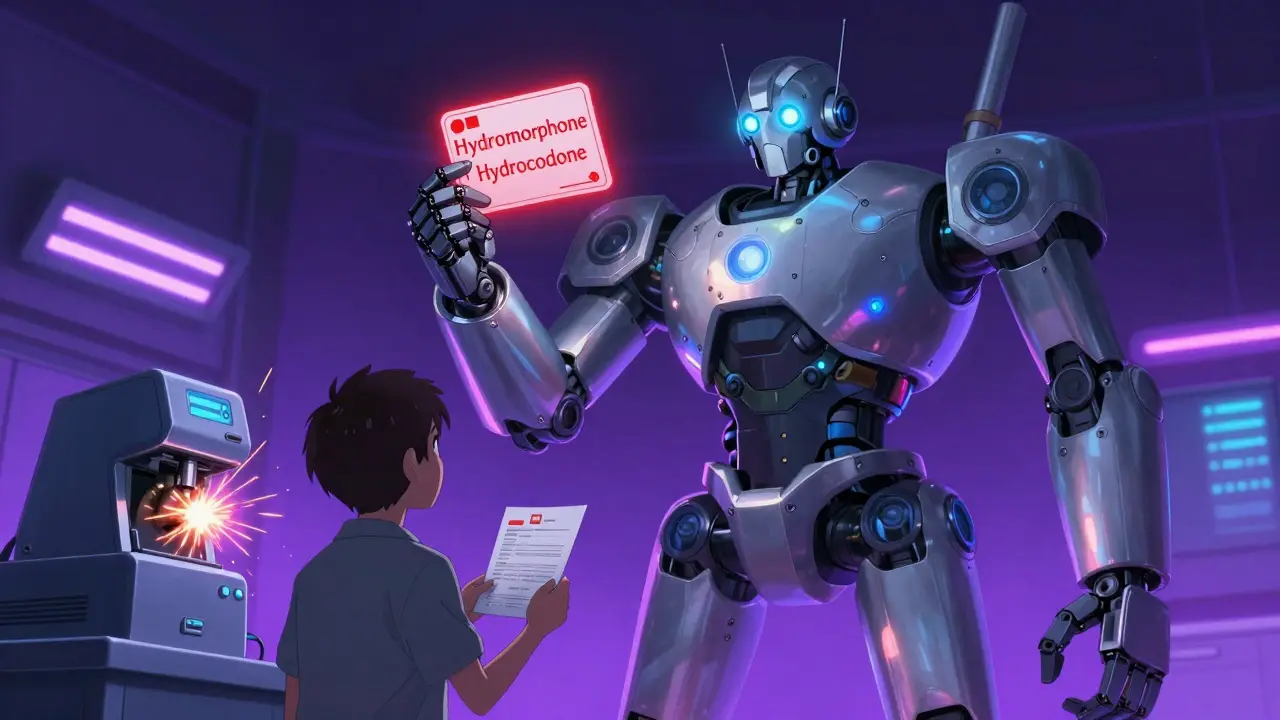
Getting medication labels right isn’t just about neat printing or fancy fonts. A single misplaced decimal, a misspelled drug name, or an incorrect dosage instruction can lead to serious harm-or even death. In hospitals and pharmacies across Australia, labeling errors are one of the top five causes of preventable medication incidents, according to the Australian Patient Safety Foundation’s 2025 report. These aren’t just typos. They’re system failures that happen when the label doesn’t match what the patient actually needs.
What Counts as a Labeling Error?
A labeling error isn’t just when the name is wrong. It’s any mismatch between what’s printed on the label and what should be there based on the prescription or clinical order. Common types include:- Wrong drug name - like labeling Hydrocodone as Hydromorphone, two completely different opioids with different risks.
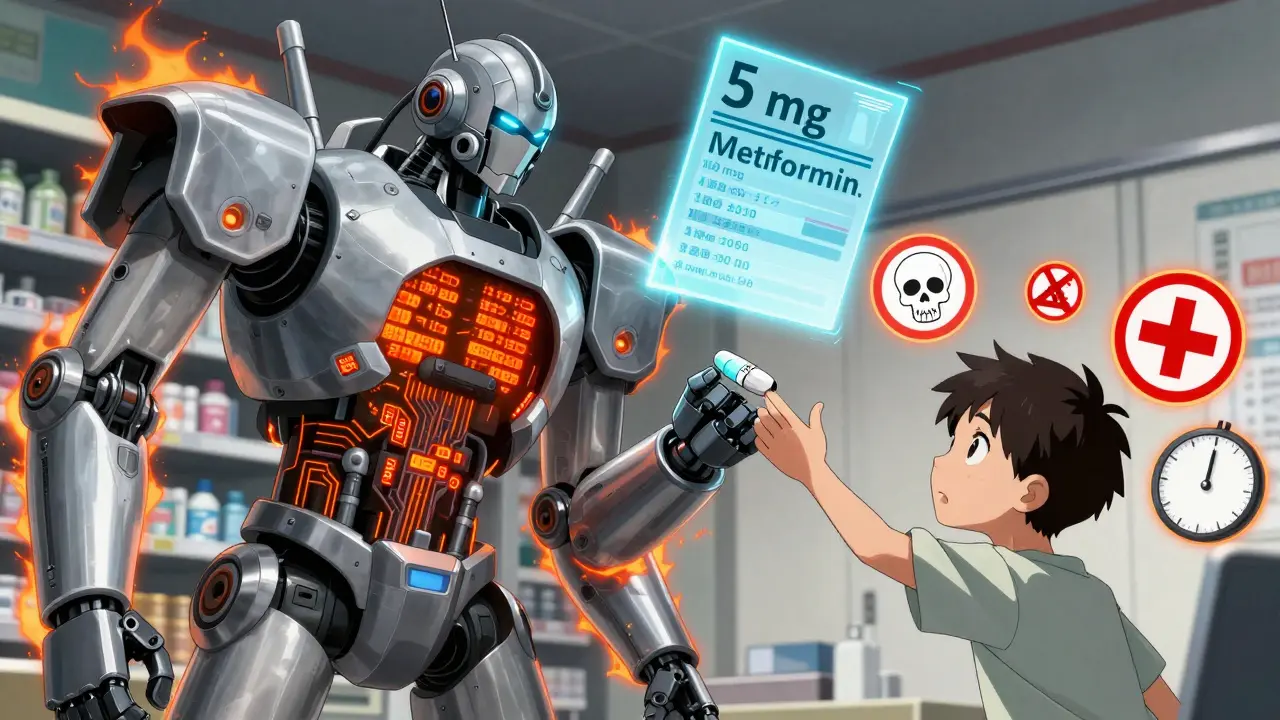
- Incorrect dosage - a label saying "Take 10 mg" when the prescription was for "5 mg".
- Missing instructions - no "Take with food," no "Avoid alcohol," or no expiration date.
- Wrong patient name - labels meant for one person accidentally printed for another.
- Wrong strength or form - labeling a 500 mg tablet as 250 mg, or a liquid as a tablet.
- Outdated or conflicting information - a label still showing an old allergy warning that was removed from the patient’s record.
These errors don’t always come from carelessness. They often stem from unclear handwriting on prescriptions, rushed workflows, outdated software, or poor communication between prescribers, pharmacists, and dispensing staff. In 2024, a study of 12,000 community pharmacy prescriptions in South Australia found that 4.7% had at least one labeling error - and 1 in 5 of those could have caused harm if not caught.
How to Spot These Errors Before They Cause Harm
You don’t need to be a pharmacist to catch a labeling mistake. Here’s what to look for every time you pick up a prescription:- Compare the label to your prescription - If you have a printed copy or a photo of the original prescription, match the drug name, dose, frequency, and route (e.g., "take by mouth") exactly.
- Check the patient name - It’s more common than you think. One Adelaide pharmacy reported 17 cases in 2023 where labels were switched between patients with similar names.
- Read the instructions aloud - If it sounds odd, it probably is. "Take two tablets every 4 hours" sounds very different from "Take one tablet every 4 hours."
- Look for red flags - Is the dosage unusually high? Is the drug known for causing serious side effects? Does it interact with something you’re already taking? If you’re unsure, ask.
- Verify the expiration date - Medications past their expiry can lose potency or become unsafe. Never take anything with a faded or missing date.
Don’t assume the pharmacist caught it. Even the best systems fail. In 2023, a Queensland hospital found that 62% of labeling errors were missed during automated checks because the system couldn’t interpret handwritten notes or ambiguous abbreviations.
How to Ask for a Correction Without Sounding Accusatory
Asking for a correction can feel awkward. You might worry you’re wasting their time or sounding distrustful. But here’s the truth: pharmacists appreciate it. They’ve seen what happens when labels go wrong. The key is how you ask.Use this simple script:
"Hi, I just wanted to double-check this label. My prescription says [drug name], [dose], [frequency], but the label says [what’s printed]. Could you confirm this is correct? I want to make sure I’m taking it right."
This works because:
- You’re not blaming - you’re verifying.
- You’re showing you’re engaged in your own care - which pharmacists respect.
- You’re giving them a chance to catch their own mistake before it causes harm.
Studies show that when patients use this approach, pharmacists correct the error 94% of the time - and often thank them for catching it. In one case in Adelaide, a patient noticed a label said "Take 10 mg of Metformin twice daily" when the prescription was for 5 mg. The pharmacist admitted the system had auto-filled the wrong dose from an old template. They corrected it on the spot and updated their software to prevent future repeats.
What to Do If They Refuse to Correct It
If the pharmacist dismisses your concern - "It’s fine, we’ve checked it" - don’t leave. Say:"I understand you’ve checked it, but I’m still concerned because the label doesn’t match my prescription. Could I speak to the supervising pharmacist or get a second opinion? I’d feel more comfortable with another set of eyes on it."
Most pharmacies have a supervising pharmacist on duty for exactly this reason. If they still refuse, ask for a written copy of the prescription and take it to another pharmacy. You have the right to safe medication. No one should pressure you into taking something that doesn’t match your doctor’s instructions.
How to Prevent Future Errors
You can reduce your risk of labeling errors long-term:- Use digital prescriptions - e-scripts eliminate handwriting errors. Ask your doctor to send prescriptions electronically.
- Keep a personal medication list - write down every drug, dose, and reason you take it. Update it after every change. Bring it to every appointment.
- Use one pharmacy - when all your meds are in one system, pharmacists can spot dangerous interactions and inconsistencies.
- Ask for a medication review - every 6-12 months, ask your pharmacist to review all your prescriptions together. Many pharmacies offer this for free.
These steps don’t just prevent labeling errors - they prevent drug interactions, overdoses, and allergic reactions. In 2024, a trial in South Australia found patients who used a personal medication list and one pharmacy had 58% fewer medication-related hospital visits.
Why This Matters More Than You Think
Labeling errors aren’t rare. They’re systemic. And they’re fixable - but only if people speak up. In Australia, over 200,000 medication errors are reported each year. About 1 in 5 of those involve incorrect labeling. Most are caught before harm occurs - because someone asked.It’s not about trusting or not trusting the system. It’s about making the system stronger. Every time you check a label and ask for a correction, you’re not just protecting yourself. You’re helping improve the process for everyone else.
Can a labeling error on a prescription cause serious harm?
Yes. Even small errors - like a missing decimal point or a wrong drug name - can lead to overdose, allergic reactions, or treatment failure. For example, confusing "Hydrocodone" with "Hydromorphone" can result in a 10-fold increase in opioid dose, which can be fatal. The Australian Patient Safety Foundation reports that labeling errors contribute to over 1,000 serious incidents annually.
How common are labeling errors in Australian pharmacies?
Studies show about 4-6% of prescriptions have at least one labeling error. In community pharmacies, the most common errors involve dosage (38%), drug name (32%), and patient name (18%). These numbers are higher in busy settings or when prescriptions are handwritten.
Should I trust automated labeling systems?
Automated systems help reduce errors, but they’re not perfect. They can misread handwriting, pull from outdated records, or auto-fill the wrong dose based on similar drug names. Always compare the label to your original prescription. Never assume the machine got it right.
What if I notice an error after I’ve already taken the medication?
Stop taking the medication immediately. Call your pharmacist or doctor. If you feel unwell or have symptoms like dizziness, nausea, rapid heartbeat, or confusion, go to the nearest emergency department. Even if you feel fine, report the error - it helps prevent it from happening to someone else.
Can I request a printed copy of my prescription?
Yes. You have the legal right to a copy of your prescription, whether it was sent electronically or written by hand. Keep it for your records and use it to verify your medication label every time you refill. Many pharmacies will print it for you at no cost.
Glenda Marínez Granados
January 20, 2026 AT 16:32Yuri Hyuga
January 21, 2026 AT 20:26MARILYN ONEILL
January 22, 2026 AT 15:42Coral Bosley
January 24, 2026 AT 01:45Steve Hesketh
January 25, 2026 AT 14:44shubham rathee
January 27, 2026 AT 11:57Kevin Narvaes
January 27, 2026 AT 23:27Rod Wheatley
January 28, 2026 AT 15:49Samuel Mendoza
January 30, 2026 AT 12:15Dee Monroe
January 31, 2026 AT 12:27Philip Williams
January 31, 2026 AT 19:22Ben McKibbin
February 1, 2026 AT 15:41Melanie Pearson
February 2, 2026 AT 16:25Jerry Rodrigues
February 2, 2026 AT 23:41