

When your stomach hurts after eating, it’s easy to blame the food. But not all reactions are the same. Two very different conditions - food intolerance and food allergy - can cause similar digestive discomfort, yet one can kill you and the other just makes you feel miserable. Knowing the difference isn’t just about comfort; it’s about safety.
What Happens in Your Body?
A food allergy is your immune system going into overdrive. It sees a harmless protein - like peanut or milk - as an invader. It makes IgE antibodies, which trigger mast cells to dump histamine and other chemicals into your bloodstream. That’s why symptoms show up fast: within minutes to two hours. You might get hives, swelling, trouble breathing, or vomiting. In severe cases, your blood pressure drops, your airway closes, and you go into anaphylaxis. That’s a medical emergency. Epinephrine is the only thing that can stop it. Food intolerance is completely different. No immune system involved. It’s a digestive problem. Your body can’t break down certain foods properly. The most common example? Lactose intolerance. You lack enough lactase enzyme to digest milk sugar. That undigested lactose moves into your colon, where bacteria ferment it. The result? Bloating, gas, cramps, and diarrhea - usually starting 30 minutes to a few hours after eating. It’s uncomfortable, but never life-threatening.GI Symptoms: How to Tell Them Apart
Both can cause nausea, diarrhea, and stomach pain. But the timing, severity, and accompanying symptoms are clues. With a food allergy, GI symptoms are part of a bigger picture. You’re not just having a tummy ache. You might also get:- Sudden hives or skin flushing
- Swelling of lips, tongue, or throat
- Coughing, wheezing, or difficulty breathing
- Dizziness or fainting
- Lactose (dairy products)
- FODMAPs (fermentable carbs in onions, garlic, beans, apples)
- Sulfites (in wine, dried fruit, processed meats)
- Gluten (in non-celiac gluten sensitivity)
Testing: What Actually Works
There’s a lot of junk science out there. Don’t waste your money on IgG blood tests for “food sensitivities.” The American Academy of Allergy, Asthma & Immunology says these tests are useless. They’re not validated. Sensitivity? Below 30%. Specificity? Under 45%. You’ll get false positives and end up cutting out foods you’re fine with. For food allergies, here’s what doctors actually use:- Skin prick test: A tiny drop of allergen is placed on your skin, then lightly pricked. A raised, red bump (wheal) bigger than 3mm compared to the control suggests an allergy.
- Specific IgE blood test: Measures IgE antibodies in your blood. A level above 0.35 kU/L is considered positive, but it’s not perfect - up to 50-90% of positive results need confirmation.
- Oral food challenge: The gold standard. You eat tiny, increasing amounts of the suspected food under medical supervision. If you react, it’s confirmed. If not, you’re cleared. This is the only way to know for sure.
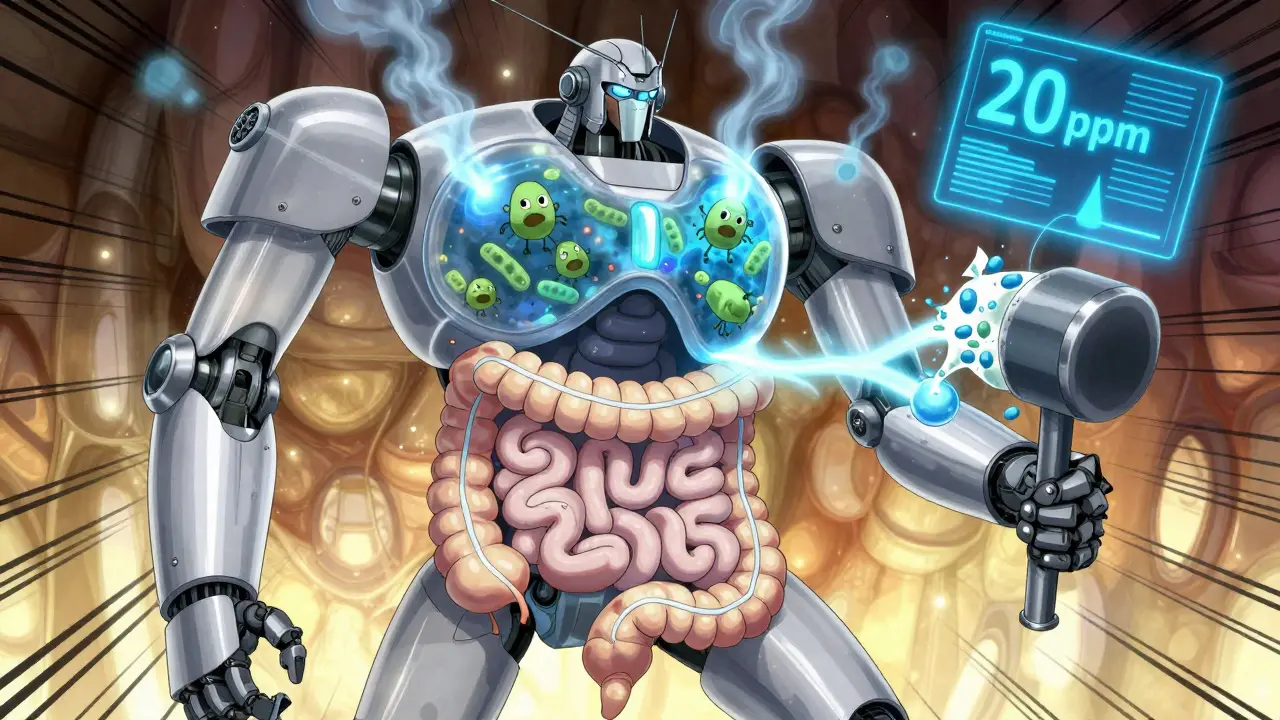
- Hydrogen breath test: For lactose intolerance. You drink a sugary solution. Your breath is tested every 15-30 minutes. A rise of 20 ppm of hydrogen confirms you’re not digesting lactose properly. Accuracy? Around 95% for detecting malabsorption.
- Celiac disease blood test: Looks for tissue transglutaminase IgA antibodies. Levels above 10 U/mL are strongly suggestive. But you must keep eating gluten before the test. If it’s positive, you need a biopsy showing Marsh 3 damage to confirm.
- Elimination and challenge: For non-celiac gluten sensitivity or FODMAP intolerance. You remove the suspected food for 2-6 weeks. If symptoms improve, you slowly add it back. If they return, it’s likely the trigger.
What You Can’t Test For - And Why It Matters
A lot of people think they have a food allergy because they feel bad after eating. But here’s the truth: 80% of self-diagnosed food intolerances turn out to be something else. A 2023 study in Clinical Gastroenterology and Hepatology found that among people who thought they had food intolerance, the real causes were:- Irritable bowel syndrome (IBS): 45%
- Inflammatory bowel disease (IBD): 12%
- Functional dyspepsia: 23%
Management: Avoidance vs. Moderation
If you have a food allergy, you must avoid the food entirely. Even trace amounts can trigger a reaction. That means reading every label. The FDA’s 2021 law requires clear labeling of the top 9 allergens: milk, eggs, fish, shellfish, tree nuts, peanuts, wheat, soy, and sesame. You also need to carry epinephrine. Two doses. Always. The cost? $550-$750 for a twin-pack without insurance. It’s expensive, but it’s your lifeline. A 2023 JAMA Network Open study showed that people with food allergies who didn’t carry epinephrine were more likely to end up in the ER - and sometimes didn’t survive. Food intolerance is different. You don’t need to cut out everything. Most people with lactose intolerance can handle up to 12 grams of lactose a day - that’s about one cup of milk. Lactase enzyme supplements can help. Hard cheeses and yogurt often have less lactose and are better tolerated. Sulfite-sensitive people can avoid wine and dried fruit, but don’t need to give up all processed foods. For non-celiac gluten sensitivity, some people can tolerate small amounts of gluten, especially if it’s from ancient grains like spelt or einkorn. It’s not about perfection - it’s about finding your personal threshold.
When to See a Doctor
You don’t need to figure this out alone. See a doctor if:- You have vomiting, diarrhea, or abdominal pain after eating - especially if it’s new or worsening
- You’ve had a reaction that involved swelling, hives, or trouble breathing
- You’ve cut out multiple foods on your own and still feel unwell
- You’ve lost weight, have blood in your stool, or have persistent fatigue
What’s New in 2026
Science is getting smarter. A 2024 study in Nature Communications found specific blood metabolites that can distinguish non-celiac gluten sensitivity from IBS with 89% accuracy. That’s huge. Right now, we’re stuck with elimination diets - slow, frustrating, and imprecise. Soon, a simple blood test might give us the answer. Also, component-resolved diagnostics are becoming more common. Instead of just testing for “peanut,” we can test for specific proteins like Ara h 2. If your level is above 0.23 kU/L, you have a 95% chance of a true peanut allergy. This helps avoid unnecessary avoidance of foods you might actually tolerate.Final Takeaway
Food intolerance isn’t dangerous. It’s inconvenient. Food allergy is dangerous. It’s life-threatening. Confusing the two leads to unnecessary fear - or worse, dangerous neglect. If you think you have a food reaction, get tested properly. Don’t rely on internet quizzes or IgG blood tests. Talk to a specialist. Get the right diagnosis. Then you can eat with confidence - and safety.Can you outgrow a food allergy?
Yes, some children outgrow allergies to milk, eggs, wheat, and soy - often by age 5 to 10. But allergies to peanuts, tree nuts, fish, and shellfish are usually lifelong. Only about 20% of people with peanut allergy outgrow it. Testing should always be done under medical supervision, never at home.
Can food intolerance turn into an allergy?
No. Food intolerance and food allergy are different biological processes. One is digestive, the other immune. You can’t “develop” an allergy from eating too much lactose or gluten. But if you have undiagnosed celiac disease, continuing to eat gluten can damage your gut and increase your risk of other autoimmune conditions. That’s not an allergy - it’s a complication.
Is gluten intolerance the same as celiac disease?
No. Celiac disease is an autoimmune disorder triggered by gluten that damages the small intestine. Gluten intolerance (non-celiac gluten sensitivity) causes similar symptoms - bloating, diarrhea, fatigue - but doesn’t cause intestinal damage or produce autoantibodies. You can have one without the other. Only a blood test and biopsy can confirm celiac disease.
Do I need to avoid cross-contamination if I have a food intolerance?
Usually not. With food intolerance, it’s about the amount you eat. A crumb of wheat in your salad probably won’t bother you if you have non-celiac gluten sensitivity. But with a true food allergy, even microscopic amounts can trigger a reaction. That’s why people with allergies need separate utensils, clean surfaces, and strict label reading. For intolerances, moderation matters more than contamination.
Why do some people react to foods they’ve eaten for years?
Your body changes. Enzyme production can drop with age - that’s why lactose intolerance often appears in adulthood. Your gut microbiome shifts due to antibiotics, stress, or diet changes. You might also develop a sensitivity to food chemicals like histamine or sulfites over time. It’s not an allergy - it’s your digestive system adapting to new conditions.
Can stress make food intolerance worse?
Absolutely. Stress affects gut motility, increases inflammation, and alters the gut microbiome. People with IBS or functional dyspepsia often notice worse symptoms during high-stress periods. That doesn’t mean the food is the problem - it means your gut is more sensitive. Managing stress through sleep, exercise, or mindfulness can reduce symptoms more than eliminating foods alone.
Bradford Beardall
January 11, 2026 AT 20:09I used to think my bloating after pizza was just 'bad food' until I did the hydrogen breath test. Turned out I was lactose intolerant but could still have cheese. Mind blown. Now I just grab a lactase pill before pasta night and life's good.
Also, that bit about IgG tests being junk? 100% true. I wasted $300 on one before finding this post. Don't be me.
lisa Bajram
January 12, 2026 AT 22:24OMG YES. I used to be that person who avoided EVERYTHING because I thought I had 'food sensitivities'-until my GI doc laughed and said, 'Honey, you have IBS, not a gluten allergy.'
Turns out, stress + FODMAPs + caffeine = my personal digestive nightmare. Cut out the onion, garlic, and coffee? I felt like a new person. No supplements. No expensive tests. Just simple changes.
And no, I don't need to buy gluten-free bread. I just need to chill the hell out and eat slower. 🙃
Ted Conerly
January 14, 2026 AT 19:25People need to stop self-diagnosing. I’ve seen friends quit dairy, gluten, soy, and eggs because they 'felt better'-only to realize their symptoms were from undiagnosed IBD. One guy had Crohn’s for five years and thought it was 'leaky gut.'
Get tested. Seriously. A colonoscopy isn’t fun, but neither is a colostomy bag at 32. Your gut deserves better than internet advice.
And if you’re going to avoid food, do it because a doctor told you to-not because some influencer said so.
Faith Edwards
January 16, 2026 AT 14:15It is profoundly disconcerting to observe the widespread epistemological neglect exhibited by the general populace regarding food-related pathophysiology.
One cannot, with any semblance of intellectual integrity, equate a transient, non-immunological digestive disturbance with a life-threatening IgE-mediated anaphylactic response. The conflation of these phenomena constitutes not merely ignorance, but a dangerous form of medical illiteracy.
Furthermore, the proliferation of unvalidated IgG assays-marketed with the predatory intent of exploiting consumer anxiety-is a scandalous abdication of scientific responsibility by the functional medicine industry.
One must, therefore, implore the public to defer to peer-reviewed literature, not TikTok influencers who claim to 'heal' their gut with kombucha and crystals.
Jay Amparo
January 18, 2026 AT 06:31As someone from India where dairy is everywhere but lactose intolerance is super common, I get this. My mom used to say, 'You can't digest milk? Then eat dahi!' And she was right-yogurt saved me.
Also, my uncle thought he was gluten intolerant until he got tested and found out he had a parasite. Weird, right? But it happens.
Don’t just cut out food-find out why. Your body isn’t broken. It’s just trying to tell you something.
Lisa Cozad
January 19, 2026 AT 23:18I used to think I had a peanut allergy because I got a rash after eating trail mix. Turned out it was the sulfites in the dried apricots. I had no idea those were even in there.
Now I read labels like my life depends on it-and honestly, it kind of does. That’s the thing: you don’t need to be allergic to need to be careful.
Also, epinephrine isn’t a luxury. It’s a necessity. Carry it. Always.
Saumya Roy Chaudhuri
January 20, 2026 AT 05:56Of course you’re not allergic to gluten-you just eat too much bread. Everyone in America eats 3 slices of sourdough at breakfast, then wonders why they feel like a bloated potato. It’s not a disease. It’s a lifestyle choice.
And those hydrogen breath tests? Overrated. Just stop eating carbs for a week and see if you feel better. Problem solved.
Also, celiac disease is a myth invented by gluten-free corporations. My grandmother ate wheat every day until she was 97. She didn’t need a biopsy.
anthony martinez
January 22, 2026 AT 02:00So let me get this straight: you’re telling me I don’t need to spend $800 on gluten-free pasta because I ‘feel weird’ after eating pasta? Wow. What a revelation. I’ll just go back to eating regular pasta and pretending my bloating is just ‘post-meal fatigue.’
Thanks for the life advice, doctor. I’m sure my colon appreciates it.
Mario Bros
January 22, 2026 AT 18:55Biggest game-changer? Lactase pills. I used to avoid cheese like it was poison. Now I eat a whole wedge of cheddar before bed and sleep like a baby. No cramps. No drama.
Also, if you think you're allergic to eggs because you got a stomach ache once? Try eating one boiled egg on an empty stomach. If you’re fine, you’re not allergic. Just stop overthinking it.
Life’s too short to be scared of food. 😎
Jake Nunez
January 22, 2026 AT 21:50My dad had a peanut allergy and carried two EpiPens everywhere. One time, he accidentally brushed against a peanut butter jar at a picnic. Didn’t touch it. Just got close. Went into anaphylaxis in 90 seconds.
That’s why I don’t care what your 'intolerance' is. If you think you might be allergic, get tested. Don’t gamble with your life.
And if you’re gonna eat something that could kill you? At least know what you’re doing.