
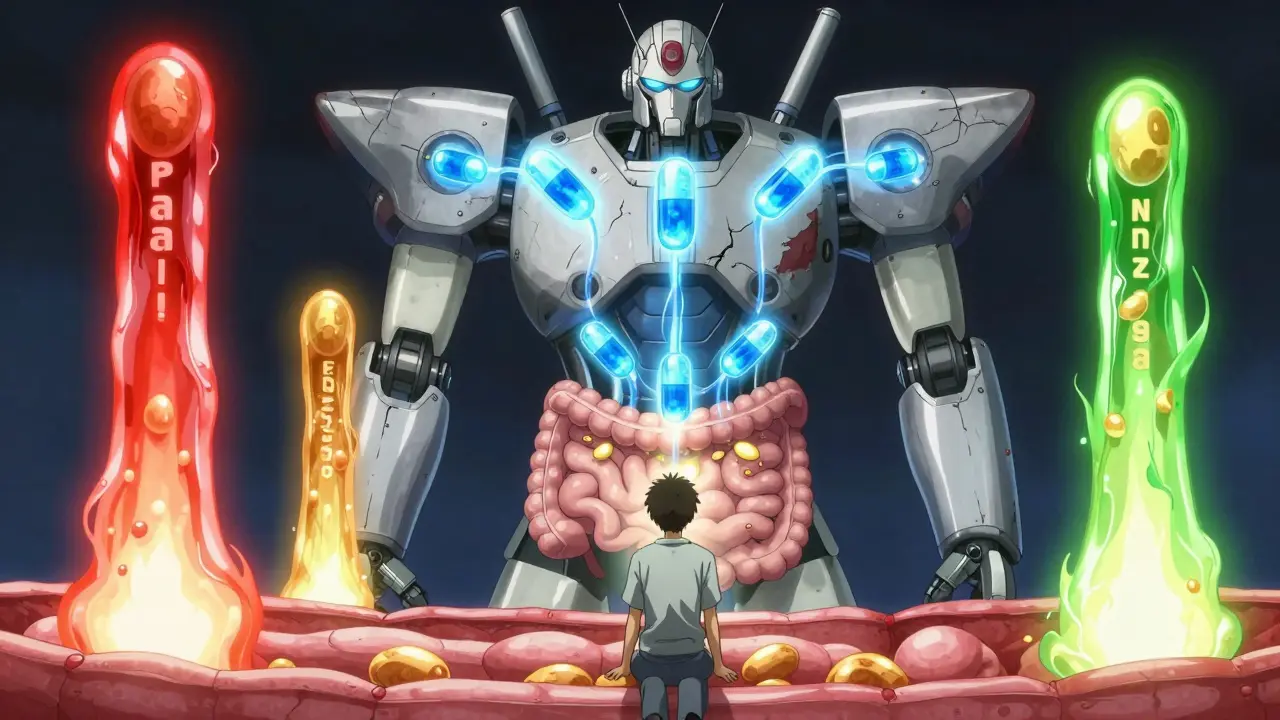
Chronic pancreatitis isn’t just a diagnosis-it’s a daily battle. For many, it means constant abdominal pain, digestive struggles, and the slow erosion of quality of life. Unlike acute pancreatitis, which comes and goes, chronic pancreatitis is permanent. The pancreas, once healthy and efficient, becomes scarred, inflamed, and unable to do its job: digest food and regulate blood sugar. By the time most people are diagnosed, the damage is already done. But that doesn’t mean nothing can be done. The real turning point comes when you understand the three pillars of management: pain, enzyme therapy, and nutrition.
Pain: The Unseen Driver
Eight out of ten people with chronic pancreatitis live with pain. Not occasional discomfort-persistent, often severe pain that lingers for hours, sometimes all day. It’s not just in the belly; it radiates to the back, worsens after eating, and doesn’t always respond to over-the-counter meds. This isn’t normal. This is neuropathic pain, meaning nerves themselves are damaged and sending wrong signals.
The first step? Start simple. Acetaminophen (up to 4,000 mg daily) is the go-to for mild cases. It’s safe for the gut, unlike NSAIDs like ibuprofen, which can cause ulcers or kidney issues in people with this condition. If that doesn’t cut it, doctors turn to medications that target nerve pain. Gabapentin and pregabalin are common. One patient on Reddit shared, “After eight different pain regimens, gabapentin at 2,400 mg/day with tramadol gave me my first real relief.” That’s not rare. Studies show these drugs reduce pain by 40-50% in many.
Tricyclic antidepressants like amitriptyline, often used for depression, also help with nerve pain. A 2019 meta-analysis found they worked for 50-60% of patients. For more severe pain, tramadol is often the most effective oral opioid-but it’s not without risks. About 30% of patients end up needing stronger opioids long-term, and that’s where addiction becomes a real concern. Experts now warn: don’t wait until you’re dependent. Early intervention with non-opioid options gives better long-term outcomes.
Enzyme Therapy: More Than Just Digestion
Your pancreas normally releases enzymes to break down fats, proteins, and carbs. In chronic pancreatitis, those enzymes stop flowing. Without them, food passes through undigested. You might lose weight, have greasy stools, or notice floating, foul-smelling bowel movements. That’s malabsorption-and it’s treatable.
Pancreatic enzyme replacement therapy (PERT) is the standard. Pills like Creon®, Zenpep®, or Pancreaze® replace what your pancreas can’t. But here’s the catch: they’re not magic. You have to take them with every meal and snack. Miss one, and fat doesn’t get broken down. The dose? Between 25,000 and 80,000 lipase units per meal. Higher doses (50,000+) are often needed, especially if you’re still having pain.
Why would enzymes help with pain? It sounds backwards, but it’s true. When fat isn’t digested, it triggers the pancreas to overwork, worsening inflammation. High-dose PERT can reduce pain by 2-3 points on a 10-point scale in nearly half of patients. That’s not a cure-but it’s a meaningful improvement. Acid blockers like omeprazole help protect enzymes from being destroyed in the stomach, especially if they’re not enteric-coated.
Cost is a barrier. Monthly prices range from $300 to $1,200. Insurance coverage varies wildly. Many patients skip doses because they can’t afford it. That’s why working with a specialist or pharmacist who understands chronic pancreatitis is critical. There’s new hope: a 2023 enzyme formulation called LipiGesic™ showed 20% better fat absorption in trials, and more targeted therapies are coming.

Nutrition: What You Eat Matters More Than You Think
Most people assume they need to eat less. But the real goal is to eat smarter. A low-fat diet (40-50 grams of fat per day) helps about two-thirds of patients avoid flare-ups. High-fat meals trigger contractions in the pancreas, which can ignite pain. That doesn’t mean no fat-just smart choices.
Medium-chain triglycerides (MCTs) are a game-changer. Unlike regular fats, MCTs don’t need pancreatic enzymes to be absorbed. They go straight to the liver. Products like Peptamen® contain MCTs and hydrolyzed proteins, making them easier to digest. One small 2010 study found that three cans a day of this formula cut pain scores by 30% in just ten weeks.
Supplements matter too. Fat-soluble vitamins (A, D, E, K) are often low because they’re not absorbed. A simple blood test can check levels. Antioxidants have shown promise: a 2013 study found a mix of selenium, beta-carotene, vitamin C, E, and methionine reduced pain in 52% of patients over six months. That’s nearly double the placebo effect.
And then there’s alcohol and smoking. If you’re still drinking or using tobacco, you’re making everything worse. Alcohol is the top cause of chronic pancreatitis-70% of cases. Quitting doesn’t reverse damage, but it stops progression. The NHS reports that 40-50% of patients see better pain control within six months of quitting. Smoking? It doubles your risk of complications and makes pain harder to treat. Quitting isn’t optional-it’s essential.
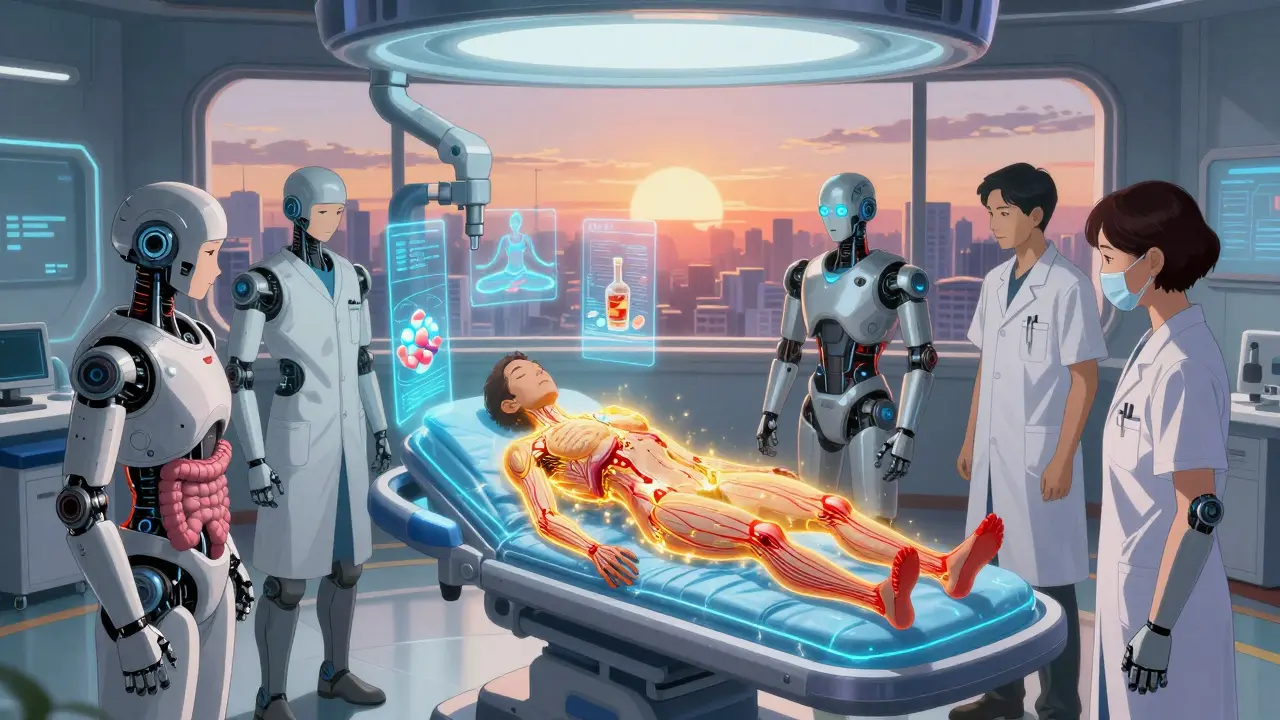
When Medications and Diet Aren’t Enough
Some people try everything: medications, enzymes, low-fat diets, quitting alcohol-and still, the pain doesn’t go away. That’s when you need to consider invasive options.
Endoscopic procedures like ERCP with stent placement can relieve pressure if the pancreatic duct is blocked. About 60-70% get initial relief, but 30-40% see pain return within a year. Celiac plexus blocks-injecting alcohol or steroids near nerves that carry pain signals-can give 3-6 months of relief. One patient described it as “nine months of near-complete pain relief after two years of agony.”
Surgery is the last resort, but for some, it’s life-changing. The Frey procedure removes the inflamed part of the pancreas and connects the duct to the intestine. It gives 70-80% long-term pain relief. Total pancreatectomy with islet autotransplantation (TPIAT) removes the entire pancreas, then transplants insulin-producing cells back into the liver. It eliminates pain in 85-90% of cases. But you’ll need lifelong insulin. Still, for patients who’ve lost years to pain and opioids, many say it’s worth it.
The Bigger Picture: Why This Is So Hard
Chronic pancreatitis is poorly understood, even by doctors. The average time from first symptoms to diagnosis? Two to three years. Many are told it’s “just indigestion” or “stress.” By then, the damage is done.
There’s no cure. No blockbuster drug. Only one new pain medication (cenobamate) is in phase 2 trials as of 2024. The market for enzyme therapy is growing, but innovation is slow. Most formulations haven’t changed in over a decade.
And yet, there’s progress. Multidisciplinary clinics-where gastroenterologists, pain specialists, dietitians, and addiction counselors work together-are showing better outcomes. A 2023 study found that 60% of patients improved significantly after six months with a specialized team. Yoga, too, has shown promise: one study reported 35% improvement in quality of life after biweekly sessions.
The message? Don’t accept pain as normal. Don’t give up if one treatment fails. The right combination-medication, enzymes, diet, lifestyle changes-can bring back control. It’s not about finding one magic bullet. It’s about stacking small wins.
Can chronic pancreatitis be cured?
No, chronic pancreatitis cannot be cured. The damage to the pancreas is permanent. But it can be managed effectively. With the right combination of pain control, enzyme therapy, nutrition, and lifestyle changes, many people reduce pain significantly and prevent further damage. Early intervention and consistent care make the biggest difference.
Do I need to take enzymes forever?
Most people do. Once the pancreas stops producing enzymes, it rarely starts again. Even if your pain improves, you’ll likely need ongoing enzyme replacement to digest food properly and avoid malnutrition. Skipping doses can lead to weight loss, vitamin deficiencies, and worsening pain. Work with your doctor to find the lowest effective dose and stick with it.
Why does fat make my pain worse?
When you eat fat, your body signals the pancreas to release enzymes to digest it. In chronic pancreatitis, the pancreas is already inflamed and scarred. This signal forces it to work harder, triggering more pain and inflammation. Low-fat meals reduce this trigger. MCT fats are an exception-they bypass the pancreas entirely and are absorbed directly by the liver, making them easier to tolerate.
Is it safe to take opioids for chronic pancreatitis pain?
Opioids like tramadol or oxycodone can be used short-term for severe pain, but long-term use is risky. Studies show 25-30% of patients develop dependence. Experts now recommend using opioids only after trying non-opioid options like gabapentin, amitriptyline, or enzyme therapy. If opioids are needed, they should be part of a monitored plan with regular check-ins and clear goals-not a default solution.
Can I still drink alcohol occasionally?
No. Even small amounts of alcohol can worsen inflammation and accelerate damage. Alcohol is the leading cause of chronic pancreatitis, and continuing to drink makes pain harder to control and increases the risk of diabetes and pancreatic cancer. Complete abstinence is the only safe option. The improvement in pain and quality of life after quitting is real-seen in 40-50% of patients within six months.
What vitamins should I take?
Fat-soluble vitamins-A, D, E, and K-are commonly deficient because they’re not absorbed without proper enzyme function. Your doctor should test your levels and prescribe supplements accordingly. Antioxidant supplements (selenium, beta-carotene, vitamin C, E, methionine) have been shown in studies to reduce pain in over half of patients. Always talk to your provider before starting any supplement, especially if you’re on other medications.
Scott Conner
February 8, 2026 AT 19:00man i wish i knew all this 5 years ago. i was just popping ibuprofen like candy and wondering why my stomach felt like it was being stabbed by a rusty spoon. acetaminophen? yeah that was my first clue something was off. and enzymes? i thought they were for dogs with bad digestion. turns out i was just a walking malabsorption case.
Marie Fontaine
February 10, 2026 AT 10:00THIS. I’m so glad someone finally broke this down like a real human. I’ve been on PERT for 3 years and it’s life-changing if you take it right. And MCTs?? Game. Changer. I drink Peptamen like it’s water now. No more greasy toilet scenes 😅
Tatiana Barbosa
February 10, 2026 AT 18:30Let me tell you-chronic pancreatitis isn’t just a diagnosis, it’s a lifestyle overhaul. Enzymes aren’t optional. They’re your new best friends. And yes, the cost sucks, but if you’re skipping doses because of price, you’re sabotaging yourself. Talk to your pharmacist. Ask about patient assistance programs. I got mine for $40/month after paperwork. Also-quit smoking. I didn’t believe it until my pain dropped 60% in 90 days. No joke.
And don’t get me started on vitamin D. My levels were so low I was practically a zombie. Supplementing didn’t just help digestion-it brought my energy back. This isn’t magic. It’s science. And you owe it to yourself to do the work.
Ken Cooper
February 12, 2026 AT 16:55Okay, so I’ve been reading this whole thing, and I’m like… why is no one talking about the fact that gabapentin makes you feel like a zombie? I took 1,200 mg a day for 6 months. I lost 15 pounds because I couldn’t eat anything without feeling like I was underwater. And then I tried pregabalin. Same thing. I don’t know if it’s the meds or the disease, but I just… stopped feeling like myself.
So I switched to amitriptyline. 25 mg at night. Now I sleep. I don’t feel like I’m drowning. I can eat without crying. I didn’t know this was even an option until I read this. Thank you. I’m not alone.
John Sonnenberg
February 13, 2026 AT 01:36Wow. This is the most coherent medical article I’ve ever read on Reddit. I’m shocked. No memes. No jokes. Just facts. I almost didn’t believe it was real. Someone actually took the time to explain enzymes properly? Who are you? A doctor? A robot? Either way… I’m impressed.
Joshua Smith
February 14, 2026 AT 11:15I’ve been on this journey for 8 years. I thought I was the only one struggling. This post nailed it. I started with ibuprofen, then tramadol, then gabapentin, then PERT. The enzymes made the biggest difference. I used to lose 10 lbs a month. Now I’m stable. Still not great-but better. And I quit smoking last year. Best decision ever.
Elan Ricarte
February 14, 2026 AT 20:05Let’s be real: this whole thing is a scam. Big Pharma doesn’t want you cured. They want you on enzymes forever, paying $800/month. And don’t even get me started on TPIAT-cut out your pancreas and transplant cells? Sounds like a sci-fi movie. They’re milking you. And the ‘low-fat diet’? That’s just a cover-up for the real issue: your liver is failing. No one talks about that. You’re being sold snake oil wrapped in medical jargon.
And why is alcohol the #1 cause? Because the government lets it be sold. The same government that bans weed but lets whiskey flow. Hypocrites. Wake up. This isn’t medicine. It’s corporate control.
THANGAVEL PARASAKTHI
February 16, 2026 AT 11:34i read this in india and i feel seen. here doctors just say 'avoid fat' and give you a pill. no one talks about enzymes or vitamins. i paid 20k rupees for one month of creon. my wife cried. but i did it. now i eat rice, eggs, and lentils. no oil. no dairy. and i sleep. not perfect. but better. thank you for writing this.
Frank Baumann
February 16, 2026 AT 11:55Y’ALL. I just had to say this. I went to 3 gastroenterologists. All of them told me to 'eat less' and 'take antacids.' One even said 'maybe it’s anxiety.' I was 28. I lost 40 pounds. I was in the ER three times. Then I found a specialist who actually knew about PERT and MCTs. I cried in the parking lot. I’m not exaggerating. This isn’t just medical advice-it’s survival. And if you’re reading this and you’re still drinking? Stop. Right now. I’m not mad. I’m just… telling you the truth. You’re killing yourself slowly.
Chelsea Deflyss
February 17, 2026 AT 03:03So you’re saying if I just take enzymes and stop drinking I’ll be fine? Lol. I’ve been doing that for 2 years. I still wake up at 3am screaming. This post is just another feel-good lie. I’m done with 'stacking small wins.' I want a cure. Not a pamphlet.
Ritteka Goyal
February 18, 2026 AT 02:47as a indian woman who lost her father to this, i want to say this: your body is not broken. your system is just confused. enzymes help because they tell your gut to chill. and yes, alcohol is the enemy. but what about stress? no one talks about how anxiety makes the pain worse. i started yoga. 20 mins a day. now i sleep. not cured. but i breathe again.
Ashlyn Ellison
February 18, 2026 AT 04:21I didn’t know what to say until I read the part about MCTs. I tried Peptamen. Just one can. I didn’t have pain for 12 hours. That’s never happened. I’m getting more. Thanks.
Jonah Mann
February 18, 2026 AT 12:12Important note: always take enzymes WITH the first bite of food-not 10 minutes after. I learned this the hard way. I was taking them with water after eating. Result? Greasy, floating, smelly nightmares. Once I started chewing the pill with the food? Overnight difference. Also, if your enzymes aren’t enteric-coated, take omeprazole. 20mg before breakfast. Trust me. This saved my life.
Tricia O'Sullivan
February 19, 2026 AT 19:24Thank you for this meticulously researched and empathetically presented overview. The integration of clinical data with lived experience is both rare and profoundly valuable. I shall share this with my colleagues in the gastroenterology unit. The emphasis on multidisciplinary care is particularly commendable. Well done.
Tori Thenazi
February 20, 2026 AT 03:11EVERYTHING in this post is a lie. The real cause of chronic pancreatitis? 5G radiation. The enzymes? Placebos. The doctors? They’re paid by Big Pharma to keep you dependent. I know someone who took a supplement made from Himalayan salt and holy basil and was cured in 3 days. The FDA banned it because it’s too cheap. And don’t get me started on how they hide the truth about pancreatic cancer links… I’ve got documents. I’ll post them. You’re being gaslit. Wake up.