
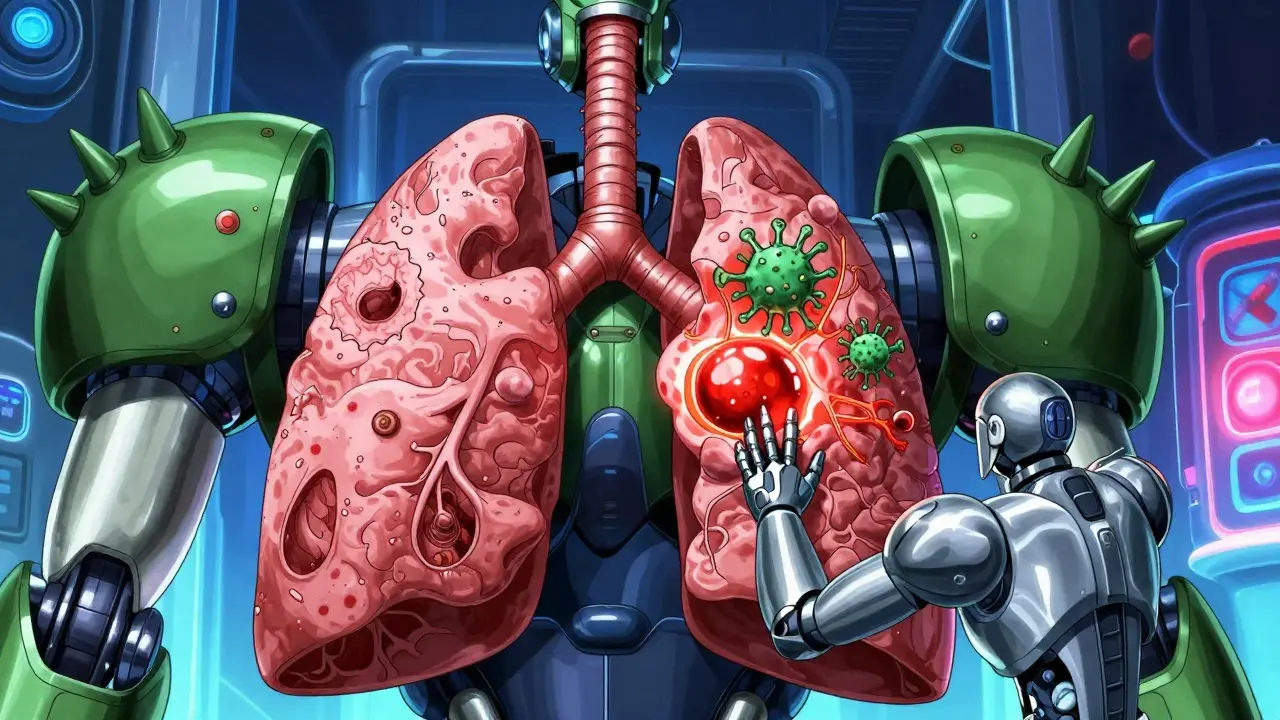
Every year, over 1 million Americans are hospitalized for pneumonia. But not all pneumonia is the same. Understanding the pneumonia types-whether bacterial, viral, or fungal-is critical for proper treatment. Get it wrong, and you might not recover. Get it right, and you can avoid serious complications.
What is pneumonia?
Pneumonia is an inflammation of the lung tissue, usually caused by infection. It affects the alveoli, the tiny air sacs where oxygen enters the blood. According to the CDC, pneumonia leads to over 1 million hospitalizations in the U.S. each year.
Bacterial pneumonia
Bacterial pneumonia is most often caused by Streptococcus pneumoniae bacteria, which accounts for about half of all community-acquired cases. Symptoms include sudden high fever (102-105°F), cough with yellow or green mucus, sharp chest pain, and fast breathing. Chest X-rays show lobar consolidation-a single white area in the lung. Treatment involves antibiotics like penicillin or macrolides.
Viral pneumonia
Viral pneumonia is commonly caused by influenza viruses, RSV, and SARS-CoV-2. Symptoms develop gradually: fever, dry cough, muscle aches, and fatigue. Unlike bacterial pneumonia, viral infections often affect both lungs equally. Chest X-rays show diffuse patterns rather than lobar consolidation. Treatment usually involves rest and fluids, though antivirals may help for flu or severe COVID-19 cases.

Fungal pneumonia
Fungal pneumonia is rare but serious, especially for people with weakened immune systems. It's caused by fungi like Coccidioides (Valley fever), Histoplasma capsulatum, and Blastomyces dermatitidis. Symptoms include fever, cough, chills, and sometimes nausea. Diagnosis requires specialized tests since it mimics other types. Treatment involves antifungal medications like amphotericin B or azoles.
How to tell them apart
| Feature | Bacterial | Viral | Fungal |
|---|---|---|---|
| Common Causes | Streptococcus pneumoniae, Haemophilus influenzae | Influenza, RSV, SARS-CoV-2 | Coccidioides, Histoplasma, Blastomyces |
| Typical Symptoms | High fever, productive cough, chest pain | Gradual onset, dry cough, muscle aches | Fever, cough, possible GI symptoms |
| Diagnosis | Chest X-ray (consolidation), sputum culture | PCR tests, viral swabs | Fungal culture, blood tests |
| Treatment | Antibiotics (penicillin, macrolides) | Antivirals for flu, supportive care | Antifungals (amphotericin B, azoles) |

Why accurate diagnosis matters
Using antibiotics for viral pneumonia does nothing and contributes to antibiotic resistance. The CDC reports that 30% of outpatient antibiotic prescriptions are unnecessary. For fungal pneumonia, antibiotics won't work at all-only antifungals do. Getting the right diagnosis means faster recovery and less risk of complications. That's why doctors use tests like chest X-rays, blood work, and cultures to pinpoint the cause.
Prevention strategies
For bacterial pneumonia, the pneumococcal vaccine reduces risk by 60-70% in children and is recommended for adults over 65. For viral pneumonia, annual flu shots cut pneumonia risk by 40-60% during flu season. The CDC says COVID-19 vaccines reduce pneumonia risk by 90% in the first few months after vaccination. For fungal pneumonia, avoid activities that stir up soil or dust if you're in high-risk areas. Farmers, construction workers, and gardeners should wear masks in endemic regions.
Can you have pneumonia without a fever?
Yes, especially in older adults or people with weakened immune systems. They might only have confusion, weakness, or shortness of breath. Always seek medical attention if you have breathing difficulties, regardless of fever.
Is pneumonia contagious?
It depends on the type. Bacterial and viral pneumonia can spread through respiratory droplets when someone coughs or sneezes. Fungal pneumonia isn't contagious-it's acquired from the environment, like soil or bird droppings. However, catching the virus that causes viral pneumonia can lead to pneumonia in some cases.
How long does pneumonia last?
Bacterial pneumonia usually improves within 1-2 weeks with antibiotics, though fatigue can linger. Viral pneumonia may take 2-4 weeks to resolve. Fungal pneumonia often requires months of antifungal treatment and can be chronic in immunocompromised individuals. Always follow your doctor's advice for full recovery.
What's the difference between walking pneumonia and regular pneumonia?
Walking pneumonia is a mild form of bacterial pneumonia, often caused by Mycoplasma pneumoniae. Symptoms are less severe-you can usually walk around and do daily activities. Regular pneumonia typically causes more intense symptoms like high fever and requires bed rest. Both need proper diagnosis to ensure the right treatment.
Can pneumonia lead to other health issues?
Yes. Severe pneumonia can cause complications like lung abscesses, pleural effusion (fluid around the lungs), or sepsis. Viral pneumonia may lead to bacterial superinfections, making recovery harder. Fungal pneumonia can spread to other organs in people with weakened immune systems. Early diagnosis and treatment are crucial to prevent these complications.
Cole Streeper
February 6, 2026 AT 07:35Big Pharma and the government are lying about pneumonia. They want you to think it's all about bacteria and viruses, but it's actually a plot to sell antibiotics. Trust me, I've seen the documents. They're hiding the truth.
Carl Crista
February 7, 2026 AT 19:36vaccines are the real cause they inject nano chips that make you sick read the studies
Joyce cuypers
February 9, 2026 AT 13:33Wash your hands regularly and get vaccinated. Typos happen but we're all learning together. 💕
Kieran Griffiths
February 10, 2026 AT 01:15Understanding the differences between pneumonia types is crucial for proper treatment. Stay safe out there!
one hamzah
February 10, 2026 AT 08:06Pneumonia types are super important for treatment. Let's all stay healthy! 😍 #HealthAwareness
Carol Woulfe
February 10, 2026 AT 17:40The medical establishment deliberately obscures the truth about fungal pneumonia. It's all about controlling the narrative. Proper diagnosis is impossible under current systems. They want you to believe in vaccines and antibiotics, but the real issue is the government's secret agenda. Every time you hear about pneumonia cases, it's part of a larger plan to push for mandatory treatments. The CDC and WHO are in on it. They've been suppressing evidence for decades. Fungal pneumonia is actually caused by 5G towers, but they hide it because they don't want you to know. The data is manipulated to fit their narrative. They say it's from soil or bird droppings, but that's a lie. The real cause is the government's chemical weapons program. You can see it in the studies if you look hard enough. They've been poisoning us for years. It's all about control. Don't trust the mainstream media. They're part of the conspiracy. The truth is out there if you're willing to look.
Cullen Bausman
February 12, 2026 AT 13:48we need to ban foreign pathogens from our country this is why we need stricter borders no more pandemics
Diana Phe
February 12, 2026 AT 19:22They're hiding the real cause of pneumonia. It's all about controlling the population. Vaccines are part of the plan. Don't trust the doctors.
jan civil
February 13, 2026 AT 20:33Fungal pneumonia requires specialized tests for accurate diagnosis. It's important to know the differences.
lance black
February 14, 2026 AT 14:15Stay strong! Recovery is possible.