
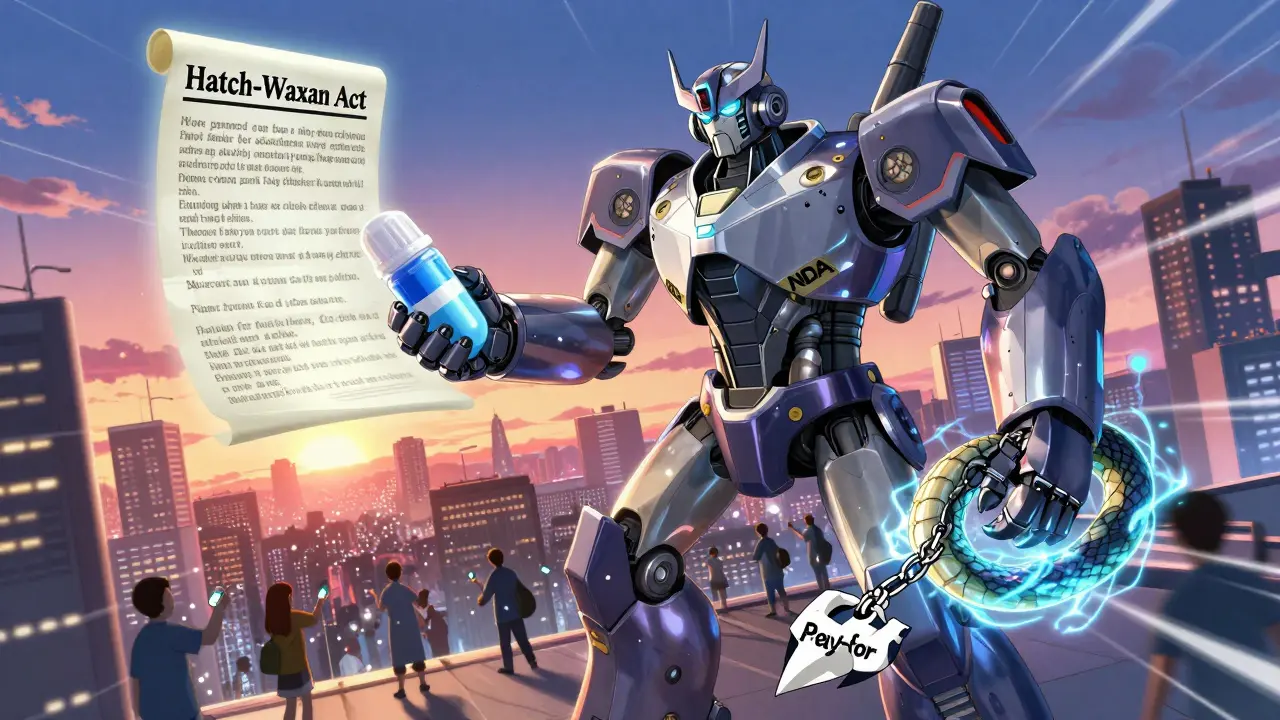
When you walk into a pharmacy and pick up a generic version of your prescription drug, you’re probably not thinking about the legal battles that made it possible. But behind every cheap pill is a complex web of patents, lawsuits, and government rules designed to keep drug prices from spiraling out of control. In the U.S., antitrust laws play a critical role in ensuring that generic drugs can enter the market and drive down costs - but not everyone plays fair.
How Generic Drugs Got Their Footing
The modern system for bringing generic drugs to market was created in 1984 by the Hatch-Waxman Act a U.S. law that balanced patent protections for brand-name drugmakers with incentives for generic manufacturers to challenge those patents. Before this law, generic drugmakers had to repeat the same expensive clinical trials as the original manufacturer. That made it nearly impossible for generics to compete. Hatch-Waxman changed that. It let generic companies file an Abbreviated New Drug Application (ANDA) - a much simpler, cheaper process - as long as they proved their drug was the same as the brand-name version.There was one big incentive: the first generic company to challenge a patent with a Paragraph IV certification got 180 days of exclusive rights to sell the generic version. That’s not just a reward - it’s a financial jackpot. During those six months, no other generic can enter, so the first mover can charge lower prices than the brand but still make huge profits. That’s how competition kicks in.
By 2016, generics accounted for 90% of all prescriptions filled in the U.S., up from just 19% in 1984. Between 2005 and 2014, Americans saved $1.68 trillion because of generics. In 2012 alone, that number hit $217 billion. That’s not just a statistic - it’s money back in people’s pockets. A single generic entering the market can slash prices by 20% within a year. With five generics competing, prices can drop by 85%.
How Companies Block Generic Entry
The system works - when it’s not being manipulated. Brand-name drugmakers have found clever, legal-sounding ways to delay competition. One of the most notorious is the "pay-for-delay" an agreement where a brand-name company pays a generic manufacturer to postpone launching its cheaper version.Imagine this: a brand-name drug’s patent is about to expire. A generic company prepares to launch. Instead of fighting in court, the brand company offers the generic maker a huge cash payment - sometimes hundreds of millions - to stay off the market. The generic company agrees. No competition. No price drop. Consumers lose.
The Federal Trade Commission (FTC) U.S. government agency responsible for enforcing antitrust laws and protecting consumers from unfair business practices has been chasing these deals for years. In 2013, the Supreme Court ruled in FTC v. Actavis that these payments could violate antitrust law if they’re large and unexplained. Since then, the FTC has taken action in 18 cases, with settlements totaling over $1.2 billion. One of the biggest was Gilead Sciences, which paid $246.8 million in 2023 to settle claims it blocked generic versions of its HIV drug.
Other tactics include:
- Product hopping: A company makes a tiny change to its drug - like switching from a pill to a capsule - and markets it as "new and improved." Then it stops selling the original. This tricks pharmacists and doctors into prescribing the new version, even though it’s not better. AstraZeneca did this with Prilosec and Nexium.
- Sham citizen petitions: A company files a fake complaint with the FDA, claiming safety issues with a generic drug. The FDA has to review it, which delays approval. Teva Pharmaceuticals is currently under FTC investigation for allegedly using this tactic to block a generic version of its multiple sclerosis drug, Copaxone.
- Orange Book manipulation: Drugmakers list patents in the FDA’s "Orange Book" that shouldn’t be there - like patents on packaging or manufacturing methods - to create fake legal barriers. In 2003, Bristol-Myers Squibb was fined for doing exactly this.

Global Differences in Enforcement
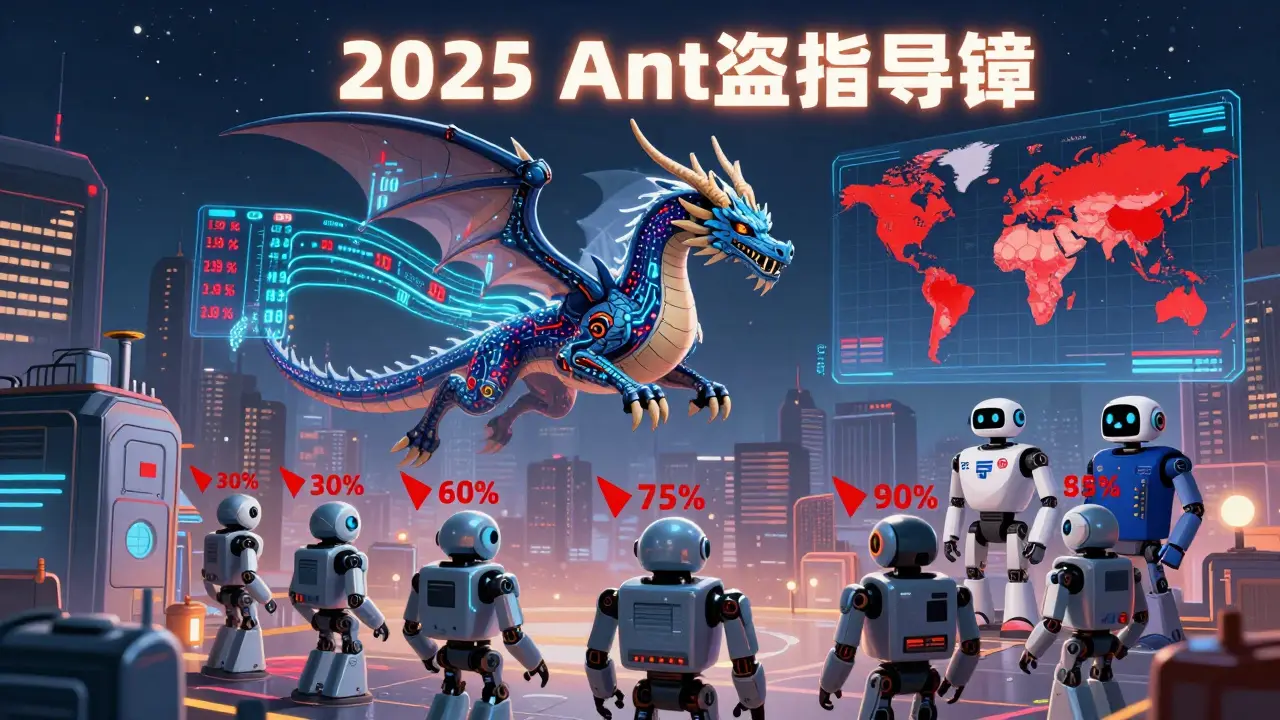
The U.S. isn’t alone in fighting generic drug monopolies. The European Union has taken a different approach. Instead of focusing mostly on pay-for-delay, the European Commission targets regulatory abuse. Companies have been caught withdrawing marketing authorizations in certain countries to block generics, or filing misleading patent applications to extend protection. In 2023, EU Commissioner Margrethe Vestager said delays in generic entry cost European consumers €11.9 billion every year.China, which just released its Antitrust Guidelines for Pharmaceutical Sector a 2025 regulatory framework identifying five hardcore restrictions in drug markets, including price fixing and algorithm-based collusion on January 24, 2025, is cracking down hard. It now treats five behaviors as automatic violations: price fixing, output restrictions, market division, joint boycotts, and blocking new technology. As of Q1 2025, six cases had been penalized - five involved price fixing through messaging apps and algorithms. Chinese regulators are even using AI to monitor pricing trends in real time.
In contrast, the U.S. focuses on court battles and FTC investigations. But both regions agree on one thing: delaying generics hurts patients.
What This Means for Patients
It’s easy to forget that behind these legal battles are real people. A 2022 Kaiser Family Foundation survey found that 29% of U.S. adults skipped doses or didn’t fill prescriptions because they couldn’t afford them. That’s not just about income - it’s about access. When a generic drug is blocked, the brand-name version stays expensive. For chronic conditions like diabetes, high blood pressure, or HIV, that can mean choosing between medication and rent.Studies show that generic competition reduces drug costs by 30% to 90%. That’s not a guess - it’s data from the Congressional Budget Office. When five generic versions hit the market, the price of a drug often drops below 10% of its original cost. That’s what competition looks like.
But when companies use legal loopholes to delay that competition, they’re not just hurting profits - they’re hurting health.
What’s Next?
The FTC’s 2022 workshop on generic drug entry after patent expiration showed that enforcement is still evolving. Product hopping, sham petitions, and pay-for-delay are still happening. The case against Teva is still pending. Meanwhile, China’s AI-driven monitoring system could become a model for other countries.One thing is clear: the Hatch-Waxman Act was meant to create competition, not a loophole for monopolies. The law works - but only if regulators stay vigilant. As generic drugs become even more central to healthcare, the fight to keep them affordable will only grow.
What is the Hatch-Waxman Act and why does it matter for generic drugs?
The Hatch-Waxman Act, passed in 1984, created the modern system for approving generic drugs in the U.S. It lets generic manufacturers file a simpler application (ANDA) instead of repeating expensive clinical trials. In return, the first generic to challenge a patent gets 180 days of exclusive sales. This law is why 90% of U.S. prescriptions are now filled with generics - and why consumers have saved over $1.6 trillion since 2005.
What is a "pay-for-delay" agreement and why is it illegal?
A "pay-for-delay" agreement happens when a brand-name drugmaker pays a generic company to delay launching its cheaper version. The Supreme Court ruled in 2013 that these deals can violate antitrust law if they involve large, unexplained payments. They prevent competition, keep prices high, and cost consumers billions. The FTC has pursued 18 such cases since 2000, with settlements totaling over $1.2 billion.
How do product hopping and sham petitions delay generic competition?
Product hopping means a drugmaker makes a minor change to its drug - like switching from a pill to a liquid - and stops selling the old version. This tricks doctors and pharmacies into prescribing the new version, even if it’s not better. Sham petitions are fake complaints filed with the FDA to delay generic approval. Both tactics are designed to avoid competition without technically breaking patent law - but regulators now treat them as anti-competitive.
How much money do generic drugs save consumers?
Between 2005 and 2014, Americans saved $1.68 trillion from generic drugs. In 2012 alone, savings hit $217 billion. Generic drugs typically cost 30% to 90% less than brand-name versions. For chronic conditions, that can mean the difference between taking medication regularly or skipping doses due to cost.
Are antitrust laws different in Europe and China?
Yes. The U.S. focuses on pay-for-delay and patent abuse. Europe targets regulatory manipulation - like withdrawing drug approvals in certain countries to block generics. China’s 2025 guidelines treat five behaviors as automatic violations, including price fixing through messaging apps and algorithms. China is also using AI to monitor pricing, a first for antitrust enforcement.
What happens if a generic drug is blocked from entering the market?
When a generic is blocked, the brand-name drug stays expensive. Patients may skip doses, delay refills, or go without treatment. A 2022 survey found 29% of U.S. adults didn’t take their medication as prescribed because of cost. Delayed generic entry doesn’t just hurt wallets - it hurts health.
Tola Adedipe
February 8, 2026 AT 10:29Niel Amstrong Stein
February 8, 2026 AT 13:10Joey Gianvincenzi
February 9, 2026 AT 21:12Marcus Jackson
February 10, 2026 AT 19:29Natasha Bhala
February 11, 2026 AT 02:14Jesse Lord
February 12, 2026 AT 13:35Catherine Wybourne
February 13, 2026 AT 22:12Heather Burrows
February 15, 2026 AT 01:43Ritu Singh
February 15, 2026 AT 08:36Mark Harris
February 15, 2026 AT 09:58Mary Carroll Allen
February 15, 2026 AT 23:08Amit Jain
February 16, 2026 AT 10:56