
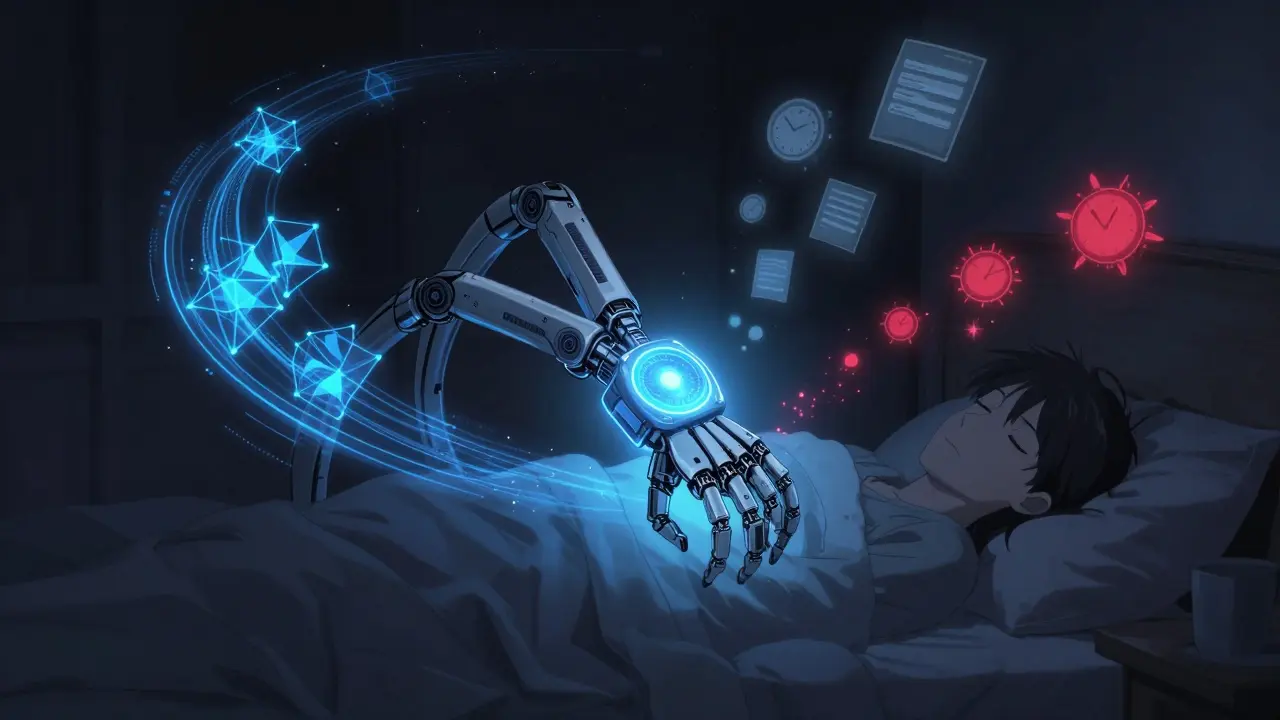
Most people think they know how much they sleep. You lie down at 11 p.m., wake up at 7 a.m. - that’s eight hours, right? But what if you were actually awake for three of those hours, lying perfectly still, staring at the ceiling? That’s not rare. It happens more than you think. This is where actigraphy changes everything. It doesn’t ask you to guess. It watches your wrist. And it tells you the truth.
What Actigraphy Really Measures
Actigraphy isn’t magic. It’s physics. A tiny sensor in a wristband, ring, or watch detects movement - up, down, side to side - hundreds of times per second. No heart rate. No brain waves. Just motion. When you’re asleep, you move less. When you’re awake, even if you’re just tossing and turning, the device picks it up. Algorithms turn that data into sleep estimates: how long you slept, how long it took to fall asleep, how often you woke up, and how much of your time in bed was actually sleep.
These devices have been around since the 1980s, but they used to be clunky, hospital-only tools. Now, they’re in your smart ring. The Oura Ring, Fitbit Charge 5, and Philips Actiwatch Spectrum Plus all use the same core principle. The difference? One is designed for clinical use. The others are for your nightstand.
How Accurate Is It?
Let’s be clear: actigraphy won’t tell you if you’re in deep sleep or REM sleep. That’s polysomnography’s job - the sleep study with wires glued to your head. Actigraphy doesn’t do that. But here’s where it shines: it tracks sleep over days, weeks, even months. One night in a lab doesn’t show your real pattern. Maybe you slept well that night because you were nervous. Maybe you slept poorly because your dog snored. Actigraphy sees the full picture.
Studies show it’s 75-90% accurate at telling sleep from wake when compared to lab tests. That’s good. But not perfect. The biggest flaw? Motionless wake. If you’re lying still, eyes open, thinking about your to-do list - the device thinks you’re asleep. That’s why some people see “90% sleep efficiency” but still feel exhausted. You weren’t moving, but you weren’t sleeping either.
Modern devices try to fix this. Garmin’s 2024 algorithm now uses heart rate variability. Oura uses skin temperature. These help guess if you’re awake even when you’re still. But they’re still guesses. Not measurements.
Consumer Devices vs. Medical Devices
You can buy a Fitbit Charge 5 for $99. Or you can rent a Philips Actiwatch for $1,500. Both use actigraphy. But they’re not the same.
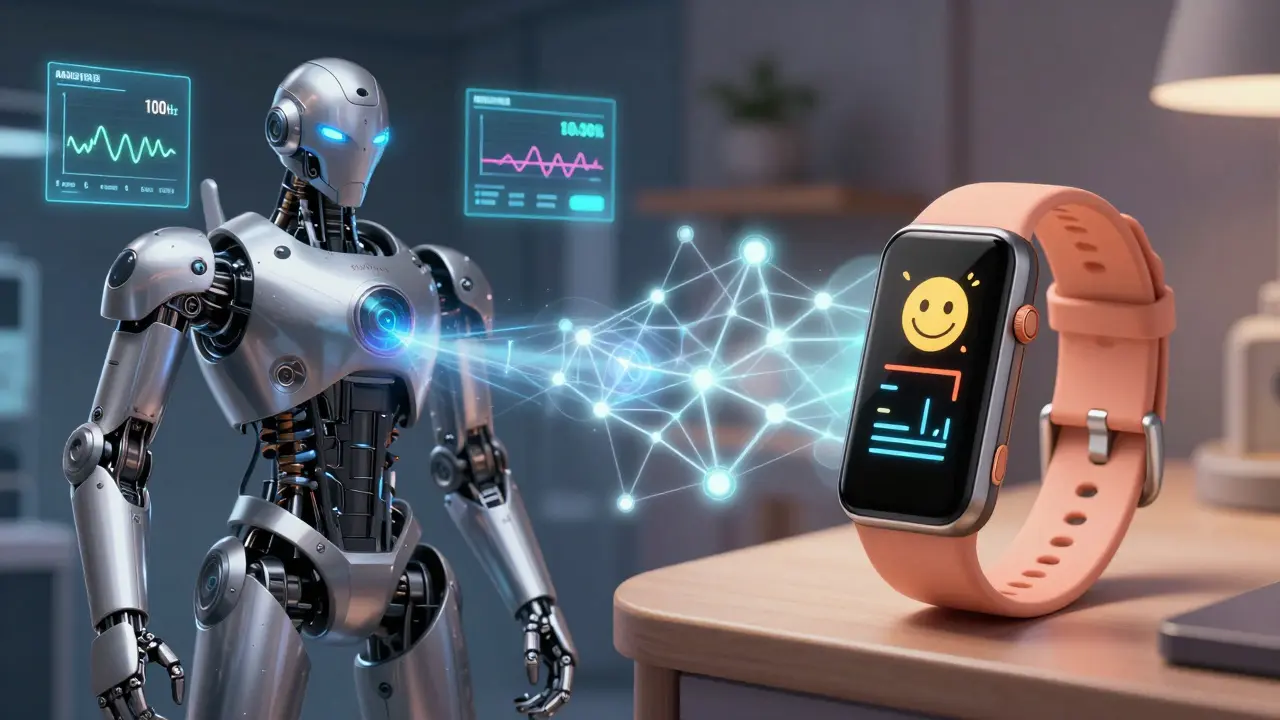
Medical-grade devices like the Actiwatch Spectrum Plus are FDA-cleared. They record raw data at 100Hz - that’s 100 movement readings every second. They’re waterproof, last up to 60 days on one charge, and sync with software used by sleep clinics. Their algorithms are validated in peer-reviewed studies. They’re used to diagnose circadian disorders, shift work sleep disorder, and paradoxical insomnia - where someone thinks they’re sleeping very little, but the device shows they’re getting enough.
Consumer wearables? They’re optimized for battery life and looks. Their algorithms are simplified. They smooth out spikes. They hide the noise. That’s fine if you just want to see if you slept “better” this week. But if you’re trying to understand why you’re always tired? It’s not enough. A 2023 Consumer Reports survey found 63% of users didn’t understand what “sleep efficiency” even meant. And that’s the problem. You get numbers without context.
What the Experts Say
Doctors aren’t against wearables. They’re against misinterpretation.
The American Academy of Sleep Medicine says actigraphy has “moderate evidence” for tracking sleep patterns in people with insomnia. But “low evidence” for diagnosing sleep apnea, restless legs, or narcolepsy. That’s important. You can’t use your Oura Ring to rule out sleep apnea. You need a breathing test.
Dr. Cathy Goldstein from the University of Michigan says it best: “Actigraphy gives you real-world data - but it should complement your doctor’s evaluation, not replace it.”
And Dr. Mathias Basner from the University of Pennsylvania warns: “Marketing makes these devices sound like diagnostic tools. They’re not. They’re awareness tools.”
That’s the key. They don’t diagnose. They reveal patterns. Maybe you’re sleeping 6 hours every night, but you’re falling asleep at 2 a.m. and waking at 8 a.m. That’s not insomnia. That’s delayed sleep phase. Or maybe you’re sleeping 7 hours, but waking up 5 times. That’s fragmentation. That’s something a doctor can help you fix - with light therapy, melatonin, or schedule changes.
How to Use It Right
If you’re thinking about trying one, here’s how to do it without driving yourself crazy.
- Wear it on your non-dominant wrist. Always. Misplacement cuts accuracy by up to 22%.
- Wear it for at least 7 days. One night means nothing. Two weeks is better.
- Don’t remove it for more than 2 hours a day. Even a nap without the device skews your data.
- Focus on trends, not single nights. A 30-minute difference from one day to the next? Normal.
- Ignore sleep stages. They’re estimates. Your total sleep time and wake-ups matter more.
- Don’t obsess. If you start checking your score at 3 a.m., you’re creating orthosomnia - sleep anxiety caused by tracking.
Clincians use specialized software like ActivInsights’ Sleep Toolkit. It takes 2 hours of training to use it well. You don’t need that. But you do need patience. Your data will look messy at first. That’s okay. Look at the big picture: Are you sleeping later each night? Are your wake-ups decreasing? Are you getting more than 6.5 hours most nights? That’s progress.
Who Benefits Most?
Not everyone needs this. But some people get life-changing clarity from it.
- People with insomnia who think they sleep 2 hours a night - actigraphy often shows 5-6. That’s a huge relief.
- Shift workers trying to adjust their rhythm. The data shows exactly when your body thinks it’s daytime.
- Travelers with jet lag. One study found 82% of frequent flyers improved their sleep schedule after 4 weeks of tracking.
- Older adults with fragmented sleep. Seeing that you wake up 3 times a night? That’s normal for your age. It’s not a disorder.
- People with circadian disorders. If you’re always asleep at 5 a.m. and awake at 1 p.m., this can confirm it.
It’s less useful for people with sleep apnea, narcolepsy, or periodic limb movement disorder. Those need breathing or movement sensors you can’t get from a wristband.

The Future: Smarter, Not Just More Data
What’s next? AI. The NIH just funded a $2.8 million project to train AI on actigraphy data to better detect wakefulness. Early results show 27% improvement. Garmin’s new algorithm already uses heart rate to guess when you’re awake. Apple’s rumored “Sleep Study” feature for Watch Series 10 might combine actigraphy with audio, temperature, and even snore detection.
But here’s the risk: more data doesn’t mean better sleep. If every number becomes a score, a goal, a failure - you’ll stress more. The goal isn’t to hit 85% sleep efficiency. It’s to wake up feeling rested. If your tracker says you slept well but you still feel like a zombie? Trust your body. Not the number.
Privacy and Data
Here’s something no one talks about: your sleep data is valuable. A 2024 Hacker News thread revealed most apps send raw actigraphy data to the cloud - without end-to-end encryption. That means companies could sell your sleep patterns. Insurance companies might use them. Employers might ask for them. A Senate hearing in early 2024 raised alarms about this exact issue. If you’re using a consumer device, check the privacy policy. Look for “data anonymization” and “opt-out” options. Don’t assume your sleep is private.
Final Thoughts
Actigraphy isn’t a diagnostic tool. It’s a mirror. It doesn’t fix your sleep. It shows you what’s really happening. And sometimes, that’s all you need.
Maybe you’ve been blaming your fatigue on stress. But the data shows you’re sleeping 5 hours every night. That’s not stress. That’s sleep deprivation. Maybe you thought you had insomnia. But you’re getting 6.5 hours - just late. That’s not insomnia. That’s a delayed rhythm. You can fix that.
Wearables make sleep visible. But they don’t make it better. Only you can do that. Use the data to ask better questions. Not to punish yourself.
And if you’re still tired? See a doctor. Bring the data. Let it help. Don’t let it replace you.
Can actigraphy diagnose sleep apnea?
No. Actigraphy tracks movement to estimate sleep and wake times, but it cannot detect breathing pauses, oxygen drops, or airflow disruptions - the hallmarks of sleep apnea. Diagnosing sleep apnea requires a polysomnography (sleep study) or a home sleep apnea test that measures breathing, oxygen levels, and airflow. Actigraphy may suggest poor sleep quality, but it cannot confirm or rule out sleep apnea.
Is actigraphy better than a sleep diary?
Yes, for objective data. Sleep diaries rely on memory and perception, which are often inaccurate. People overestimate how long they slept and underestimate how often they woke up. Actigraphy removes that bias. It provides continuous, real-time data without asking you to remember. However, combining both - using a diary to note stress, caffeine, or naps - gives the most complete picture.
How long should I wear an actigraphy device to get useful data?
At least 7 consecutive days, but 14 days is ideal. One night doesn’t reflect your typical pattern. A single bad night - due to stress, illness, or travel - can skew results. Two weeks captures variations across workdays, weekends, and different routines. Clinicians typically require 7-14 days of data before making any clinical judgment.
Why does my wearable say I slept 8 hours but I still feel tired?
Because actigraphy can’t detect motionless wakefulness. If you’re lying still but awake - scrolling, worrying, thinking - your device thinks you’re asleep. This is called “sleep misperception.” It’s common in people with insomnia or anxiety. Your device may show 8 hours of sleep, but if you were awake for 2 of those hours, your brain never got rest. That’s why feeling rested matters more than the number.
Are consumer wearables like Fitbit or Oura Ring reliable?
For tracking trends over time, yes. For precise medical diagnosis, no. Consumer devices are 85-90% accurate for total sleep time when compared to research-grade actigraphs. But they’re less accurate at detecting wakefulness, sleep stages, or short awakenings. They’re great for noticing if you’re sleeping more this month than last. They’re not reliable for confirming a sleep disorder. Use them for awareness, not diagnosis.
Can actigraphy help with jet lag?
Yes, especially for frequent travelers. Actigraphy tracks your body’s natural rhythm by detecting movement patterns tied to light exposure and activity. After crossing time zones, it shows exactly when your body thinks it’s nighttime. This helps you time light exposure, melatonin, or meals to reset your clock faster. A 2023 study found 82% of business travelers improved their sleep schedule after 4 weeks of using actigraphy to guide their adjustment.
What’s the biggest mistake people make with sleep trackers?
Obsessing over single-night scores. Sleep naturally varies. A 6-hour night after a late workout is normal. A 9-hour night after a nap is also normal. The goal isn’t perfection - it’s consistency. The biggest mistake is letting a number create anxiety. If you start stressing about your sleep score, you’re more likely to have trouble falling asleep. Focus on weekly trends, not daily numbers.
Do I need a prescription to use actigraphy?
No. Consumer wearables like Fitbit, Oura, or Garmin require no prescription. But if you’re using a medical-grade actigraph for clinical purposes - like diagnosing a sleep disorder - your doctor will typically prescribe it and arrange for a rental or loan. Insurance may cover it if it’s part of a formal sleep evaluation. For personal use, you can buy one outright.
Can actigraphy track naps?
Yes, if you wear the device during the nap. Actigraphy detects movement patterns, so a 20-minute nap on the couch will show up as a short sleep period. However, if you nap with the device off, or if you’re lying still during the nap, it may not register. For accurate nap tracking, wear it consistently - even during daytime rest.
Should I stop using my sleep tracker if it’s inaccurate?
Not necessarily. No device is 100% accurate. The value isn’t in perfect numbers - it’s in patterns. If your tracker shows you’re sleeping 5.5 hours every night, even if it’s off by 30 minutes, the trend is real. You’re not getting enough. Use it to spot changes: Are you sleeping more after cutting caffeine? Less after traveling? That’s useful. Just don’t treat every number as gospel. Trust your body more than the screen.
Rob Turner
February 14, 2026 AT 22:41Brad Ralph
February 15, 2026 AT 18:15Gabriella Adams
February 15, 2026 AT 21:02Jim Johnson
February 16, 2026 AT 20:33christian jon
February 17, 2026 AT 00:51Rachidi Toupé GAGNON
February 18, 2026 AT 13:44Suzette Smith
February 20, 2026 AT 03:34Luke Trouten
February 21, 2026 AT 21:34Craig Staszak
February 22, 2026 AT 12:22Pat Mun
February 23, 2026 AT 16:16Neha Motiwala
February 23, 2026 AT 22:39Vamsi Krishna
February 24, 2026 AT 07:14andres az
February 25, 2026 AT 06:37steve sunio
February 26, 2026 AT 06:40Autumn Frankart
February 26, 2026 AT 09:19